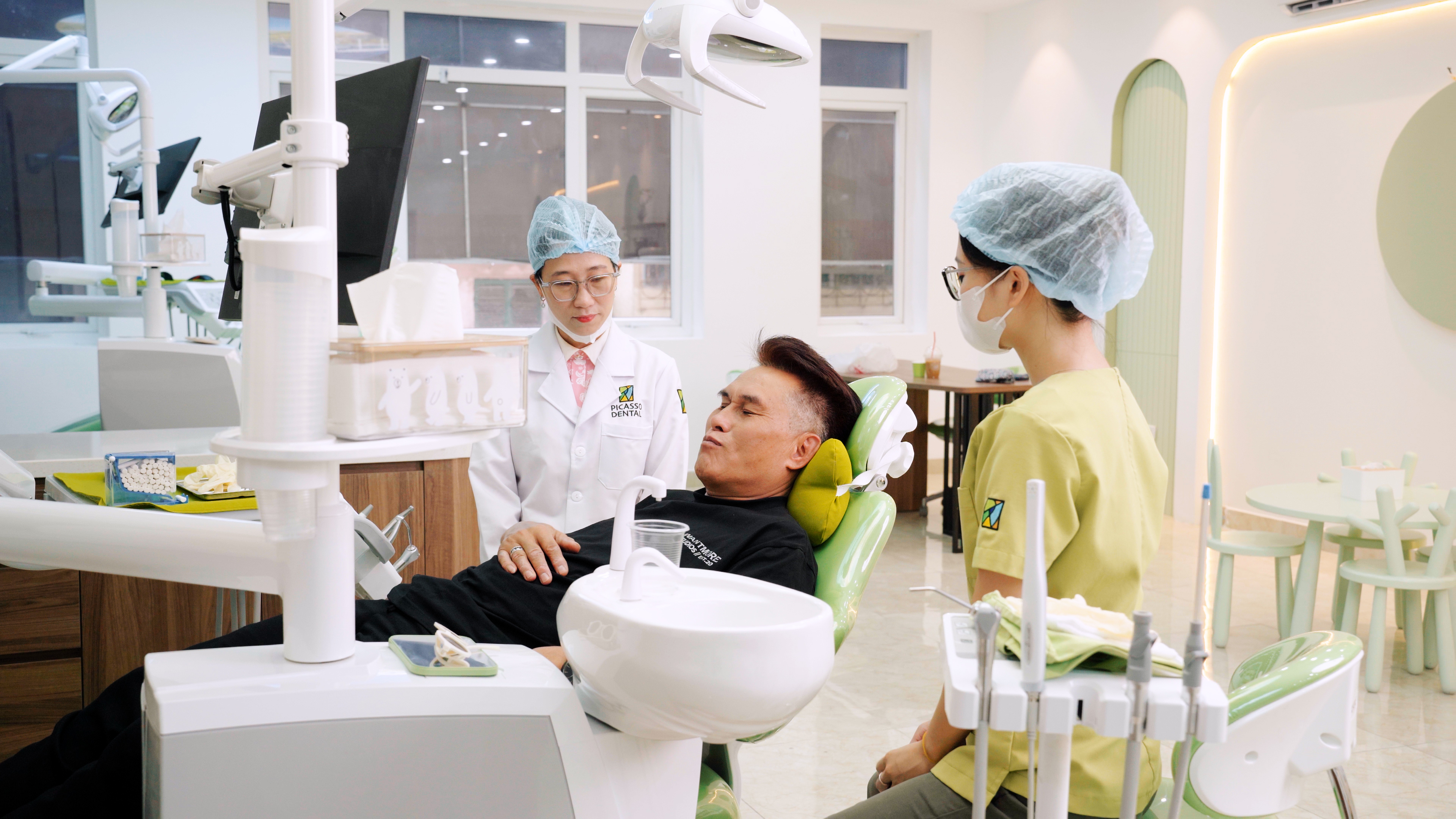

Overview
Invisalign is the world’s leading clear aligner system for straightening teeth without visible braces. Using a series of custom-made, virtually invisible plastic trays, Invisalign gradually moves your teeth into the desired position. In Hanoi, you can access certified Invisalign treatment at prices 50-70% lower than Western countries.
Clear aligners are popular among adults and teens who want to straighten their teeth discreetly. The aligners are removable, comfortable, and nearly invisible when worn. Hanoi has several Invisalign-certified providers with the experience and technology to deliver excellent results.
Procedure Steps
Step 1: Consultation and Digital Scan
Your Invisalign-certified dentist examines your teeth and takes digital iTero scans (or impressions) of your dental arches. These 3D scans form the basis of your treatment plan.
Step 2: ClinCheck Treatment Plan
Using Invisalign’s proprietary ClinCheck software, your dentist creates a virtual 3D treatment plan showing the step-by-step movement of your teeth from start to finish. You can preview your expected results before committing to treatment.
Step 3: Aligner Fabrication
Once you approve the treatment plan, the data is sent to Invisalign’s manufacturing facility where your custom aligners are produced. Each set is precisely calibrated to move teeth incrementally.
Step 4: Aligner Delivery and Fitting
Your dentist provides the aligner sets and ensures the first set fits correctly. Attachments may be bonded to certain teeth to facilitate specific movements. You receive instructions on wear schedule, care, and aligner changes.
Step 5: Progressive Treatment
You wear each set of aligners for 1-2 weeks, then switch to the next set. Check-up appointments every 6-10 weeks monitor progress and make any necessary adjustments.
Step 6: Completion and Retention
After the final aligner, retainers are provided to maintain your new alignment. Some patients may need a short refinement phase with additional aligners.
Hanoi Pricing
| Invisalign Tier | Price Range (USD) | Aligners | Duration |
|---|---|---|---|
| Invisalign Express (minor cases) | $1,500 - $2,000 | 7-14 sets | 3-7 months |
| Invisalign Lite (mild cases) | $2,000 - $3,000 | 14-28 sets | 6-12 months |
| Invisalign Full (moderate-complex) | $3,000 - $5,000 | 28+ sets | 12-24 months |
Compared to Western prices:
| Tier | Hanoi | US/Australia | Savings |
|---|---|---|---|
| Invisalign Lite | $2,000 - $3,000 | $4,000 - $6,000 | 50-60% |
| Invisalign Full | $3,000 - $5,000 | $5,000 - $9,000 | 40-55% |
Which Clinics Offer Invisalign
Picasso Dental Clinic (Old Quarter)
Picasso Dental is the top choice for Invisalign in Hanoi and a certified Invisalign provider with extensive experience in clear aligner treatment. Their iTero digital scanning technology and advanced treatment planning expertise ensure precise, predictable results. The clinic has completed hundreds of Invisalign cases ranging from mild alignment issues to complex bite corrections. Conveniently located in the Old Quarter for international visitors.
View Picasso Dental Old Quarter details
Westcoast International Dental
Westcoast International Dental offers Invisalign treatment with international-standard care, digital scanning, and experienced orthodontists. Their English-speaking staff provide clear communication throughout the aligner treatment process, making them a strong choice for dental tourists and expats.
View Westcoast International Dental details
Recovery Tips
- There is no recovery period – you begin wearing your aligners immediately.
- Mild pressure and tightness when starting a new set of aligners is normal and means they are working. This usually subsides within 1-2 days.
- Remove aligners for eating and drinking anything other than water.
- Brush and floss your teeth before reinserting aligners after meals.
- Clean aligners daily with a soft toothbrush and lukewarm water. Avoid hot water as it can warp the plastic.
- Wear aligners 20-22 hours per day for optimal results.
- Store aligners in their case when not wearing them to prevent loss or damage.
- Keep previous aligner sets as backups in case a current set is lost or damaged.
Sources
- American Dental Association — Orthodontics — guidance on orthodontic treatment options including clear aligners
- PubMed — Clear Aligner Therapy: A Systematic Review — clinical research on the effectiveness of clear aligner treatment
- British Dental Association — Orthodontics — patient information on teeth straightening options