America has the most expensive dental care in the developed world. The US dental insurance system leaves most major restorative work either uncovered or reimbursed at rates that still leave patients carrying thousands of dollars in out-of-pocket costs. A single implant can run $4,000–$6,500 before anyone asks about the crown. An All-on-4 full-arch reconstruction regularly lands between $20,000 and $35,000 — per arch. For a growing number of American patients, flying to Hanoi for dental work is not a compromise. It is the financially rational choice.
This guide puts the real numbers on the table: procedure costs in both countries, the full cost of getting to Vietnam and back, and what that means for your net saving. It also addresses the quality question directly, because cost alone does not make a decision.
The Core Numbers: USA vs Vietnam
The table below uses current market pricing for 2026. US figures reflect national averages from the ADA Health Policy Institute; Hanoi figures reflect mid-to-premium clinic pricing at internationally accredited practices.
| Procedure | US Cost | Hanoi Cost | Saving |
|---|---|---|---|
| Single implant (Osstem, fixture + crown) | $3,000–$4,500 | $700–$1,100 | $2,300–$3,400 |
| Single implant (Nobel Biocare) | $4,000–$6,000 | $900–$1,400 | $3,100–$4,600 |
| Single implant (Straumann) | $4,500–$6,500 | $1,000–$1,500 | $3,500–$5,000 |
| All-on-4 (per arch) | $20,000–$35,000 | $4,500–$8,500 | $15,500–$26,500 |
| All-on-6 (per arch) | $24,000–$40,000 | $6,000–$11,000 | $18,000–$29,000 |
| Porcelain veneers E.max (per tooth) | $1,200–$2,500 | $150–$400 | $1,050–$2,100 |
| Zirconia crown | $1,000–$1,800 | $150–$350 | $850–$1,450 |
| Invisalign (full case) | $4,000–$8,000 | $1,500–$4,000 | $2,500–$4,000 |
| Teeth whitening (Zoom) | $400–$800 | $80–$180 | $320–$620 |
| Root canal (molar) | $900–$1,500 | $120–$250 | $780–$1,250 |
The patterns are consistent across every procedure category. Savings range from roughly 75% on veneers and crowns to over 80% on implants and All-on-4 full-arch cases. The absolute dollar amounts are largest on the complex restorative work — which is precisely where US insurance leaves patients most exposed.
The True Cost of a Vietnam Dental Trip
The number that legitimately changes the calculus is travel cost. Many patients assume the flight and hotel erode the saving significantly. Here is the full accounting.
| Item | Cost (USD) |
|---|---|
| Round-trip flight (LAX/SFO to Hanoi, economy) | $700–$1,400 |
| Round-trip flight (JFK/NYC to Hanoi, economy) | $900–$1,600 |
| Hotel (10 nights, mid-range, Old Quarter) | $500–$1,000 |
| Food and local transport (10 days) | $250–$400 |
| Total travel overhead | $1,450–$3,000 |
On a single Nobel Biocare implant, the Hanoi saving ($3,100–$4,600) covers the entire travel overhead in every scenario, with money left over. On a four-implant case, the net saving after all flights and accommodation runs $10,000–$15,000. On a dual-arch All-on-4 case, the net saving is typically $25,000–$45,000 after travel.
The breakeven point — where travel costs equal dental savings — sits somewhere around a single crown or a teeth whitening session. For anything more substantial, the trip pays for itself and then some.
Combining Treatment with Time in Hanoi
Hanoi is not an unpleasant place to spend 10 days while your implants integrate. The Old Quarter is a UNESCO-listed historic district within walking distance of most clinics. Daily food costs for an American visitor run $15–$30. Many patients treat the trip as a combination dental visit and international holiday, which changes the psychological accounting of the travel cost considerably.
Why Prices Are Lower — And Why It Is Not Lower Quality
The most common concern from American patients is obvious: if it costs a quarter of the US price, something must be worse. In practice, the price gap reflects structural cost differences, not quality differences.
The same Straumann SLActive or Nobel Biocare Active implant fixture costs similar amounts on the global supply chain whether purchased in New York or Hanoi. The components arriving at a Hanoi clinic are the same components arriving at a US clinic — sourced from the same Swiss and Swedish manufacturers. What differs dramatically:
- Dentist salaries. An implantologist in Vietnam earns 15–25% of the salary of a comparable US specialist. This is not a reflection of skill level — it reflects the local cost of living and the local professional market.
- Clinical rent. Space in Hanoi’s Old Quarter costs 5–10% of equivalent clinical space in Manhattan or Beverly Hills.
- Malpractice insurance. Vietnamese professional liability insurance is a fraction of US malpractice coverage costs, which have become a significant driver of US dental fees.
- Administrative overhead. There is no insurance billing department, no coding staff, no prior authorisation delays, and no denial management process. A Hanoi clinic invoices you directly and gets paid.
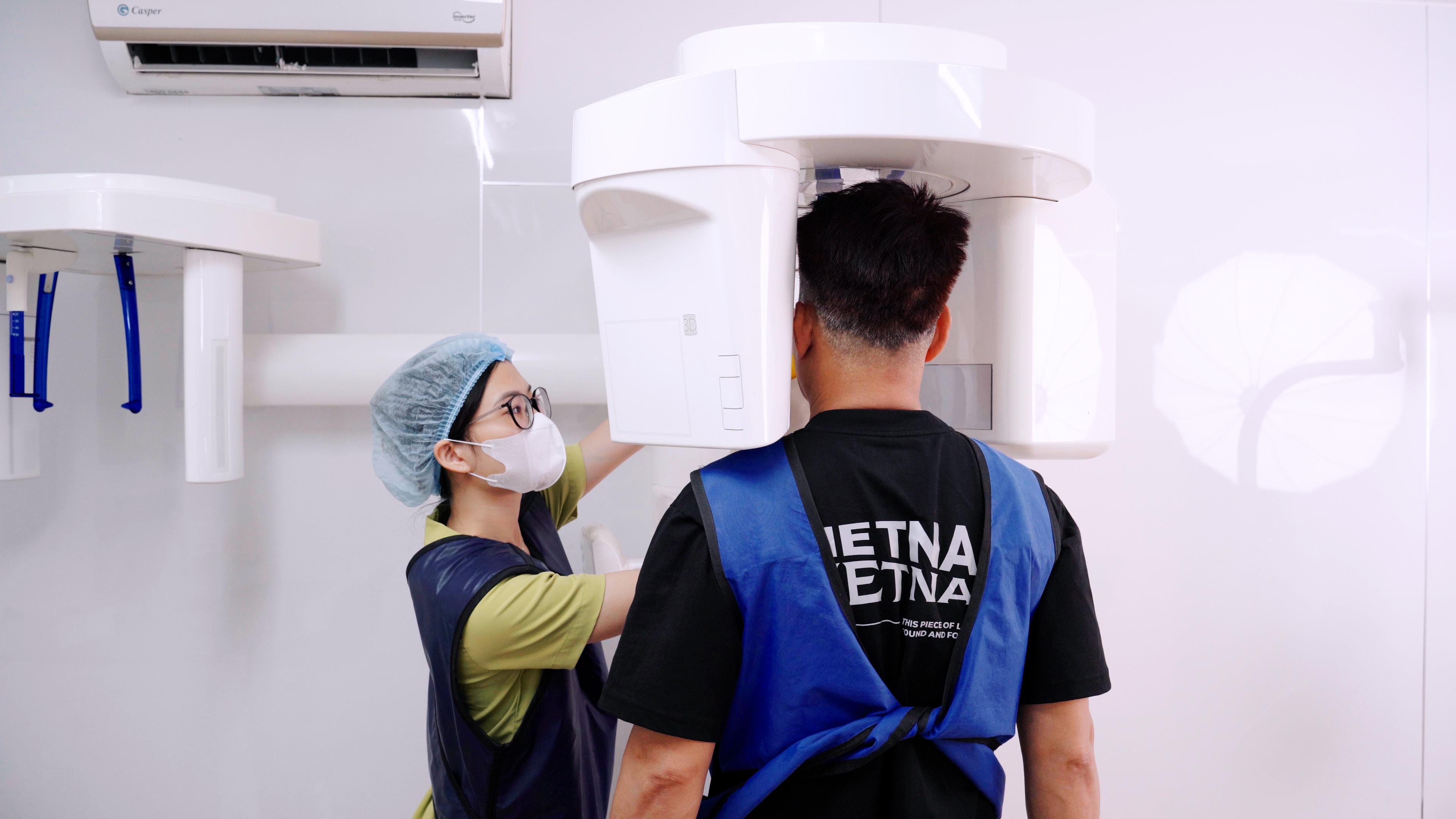
Top Hanoi clinics reinvest the saved overhead in equipment. Full CAD/CAM milling for same-day crowns, CBCT cone beam imaging, digital smile design software, and internationally sourced implant components are standard at the better practices. Patients frequently receive more diagnostic imaging and more chair time per appointment than they would at a busy US practice operating under insurance time pressure.
Are US Dental Standards Actually Higher?
US dental school training is rigorous. So is Vietnamese. Vietnamese dentists complete a six-year Doctor of Dental Surgery programme — longer than the standard four-year DDS in most US programmes. Specialists complete additional post-graduate residency. Many of the implantologists and prosthodontists working at Hanoi’s leading clinics have completed post-graduate training in South Korea, Japan, Germany, or the United States itself.
Vietnam’s dental profession has been shaped by decades of investment from international dental organisations and by the significant diaspora of Vietnamese-trained specialists who trained abroad and returned. The clinical knowledge base at the top end is genuinely international.
The country-level comparison is ultimately less useful than the clinic-level comparison. The right question is: does this specific clinic have documented training, certified equipment, traceable implant components, and a record of treating international patients? For guidance on evaluating a clinic before you book, see How to Choose a Dental Clinic in Hanoi.
Implant Brands: Matching What You Would Get in the US
American patients who have been quoted for implants in the US will often have a brand name on their treatment plan — Straumann, Nobel Biocare, or Zimmer Biomet. These are the same brands used at top Hanoi clinics.
- Straumann (Switzerland) — the global standard for premium implants, used at Greenfield Dental and several other Hanoi practices
- Nobel Biocare (Sweden/US) — widely available, used at practices including Picasso Dental Old Quarter and Picasso Dental Westlake
- Osstem (South Korea) — the dominant brand in the Asian market, with a strong evidence base and survival rates comparable to European premium brands
- Zimmer Biomet (US) — available at select Hanoi clinics
When enquiring with a Hanoi clinic, ask specifically for the implant brand, the implant system name, and whether they can provide an implant certificate after placement. Legitimate clinics provide this as standard. The certificate identifies the exact component placed and is useful for any future treatment back in the US.
FSA and HSA: Using Pre-Tax US Dollars for Vietnam Dental Work
FSA (Flexible Spending Account) and HSA (Health Savings Account) funds can be used for eligible dental expenses regardless of the provider’s country. The IRS does not restrict these accounts to US-based providers. Eligible dental expenses include implants, crowns, fillings, root canals, orthodontics, and most restorative and preventive work.
The process is straightforward:
- Pay the Hanoi clinic by credit card or bank transfer
- Request an itemised receipt in English listing each procedure by name and cost
- Submit the receipt to your FSA or HSA plan administrator on return
- Receive reimbursement from your pre-tax funds
If you are in the 25–32% marginal tax bracket, this makes your Hanoi dental expenses effectively 25–32% cheaper again on top of the already-lower base price. An $8,000 All-on-4 arch becomes roughly $5,400–$6,000 in after-tax terms when paid through an HSA.
Always confirm eligibility with your specific plan administrator before travelling, as individual plan rules can vary. Most major FSA and HSA administrators accept overseas dental receipts provided they are itemised and in English.
Planning Your Trip: How Long Do You Need?
Treatment timelines depend on the procedures involved:
- Veneers (6–10 teeth): 5–7 days. Preparation, temporaries, and fitting of final E.max or zirconia veneers can be completed in a single visit.
- Single implant: 7–10 days for placement. The final crown requires a second visit 3–6 months later, unless immediate loading is clinically appropriate.
- All-on-4 (one arch): 8–12 days. Includes extraction if needed, implant placement, and fitting of the provisional bridge.
- All-on-4 (both arches): 10–14 days.
- Invisalign: Initial consultation and scanning take 1–2 days. Aligners are manufactured and shipped to your home address globally.
Most Hanoi clinics that work with international patients are experienced at compressing treatment into tight schedules. Confirm the proposed timeline in your treatment plan before booking flights.
Recommended Hanoi Clinics for US Patients
The following clinics have documented experience with American patients, English-speaking staff, and international implant systems:
- Picasso Dental Old Quarter — 5.0 Google rating, over 70,000 international patients treated, ISO 9001 certified, Nobel Biocare and Straumann systems
- Australian Dental Clinic — 4.8 stars, known for All-on-4 and complex full-arch restorations, Australian-standard protocols
- Westcoast International Dental — multilingual clinical team, in-house CAD/CAM laboratory, strong implant programme
- Greenfield Dental — European treatment protocols, Straumann implant system, detailed pre-treatment planning
- Minh Thu Dental — established practice with broad restorative and cosmetic capability
- Picasso Dental Westlake — second Picasso location in Tay Ho district, same clinical standards
Each of these practices issues written warranties on implant work, provides English-language documentation, and can coordinate with your US dentist for records transfer.
Making the Decision
The financial case for flying to Hanoi for significant dental work is not close. On any treatment plan involving two or more implants, a full-arch restoration, or a full veneer set, the net saving after all travel costs is substantial — often exceeding $10,000 and sometimes exceeding $30,000.
The non-financial considerations are real but manageable. The flight from the continental US to Hanoi is 18–22 hours with a connection. You will need to plan around your treatment timeline. You will need to be organised about documentation for insurance and FSA/HSA purposes. You will need to choose your clinic carefully.
None of these are trivial, but none of them are prohibitive. Hundreds of thousands of international patients travel to Hanoi for dental work each year. For American patients facing large out-of-pocket dental expenses, the question is not really whether Vietnam is worth considering — it is whether you can afford not to.
Related Reading
- American Guide to Dental Work in Hanoi
- How to Choose a Dental Clinic in Hanoi: Full Checklist
- Dental Implants in Hanoi
- All-on-4 in Hanoi
- Veneers in Hanoi
- Top 6 Dental Clinics in Hanoi
- Hanoi Dental Prices 2026
Sources
- ADA Health Policy Institute, Dental Fees Survey 2024, American Dental Association
- Vietnam Dental Association, International Patient Pricing Guidelines 2025
- ITI Consensus Statements on Implant Survival Rates, International Team for Implantology, 2023
- IRS Publication 502, Medical and Dental Expenses, Internal Revenue Service, 2025