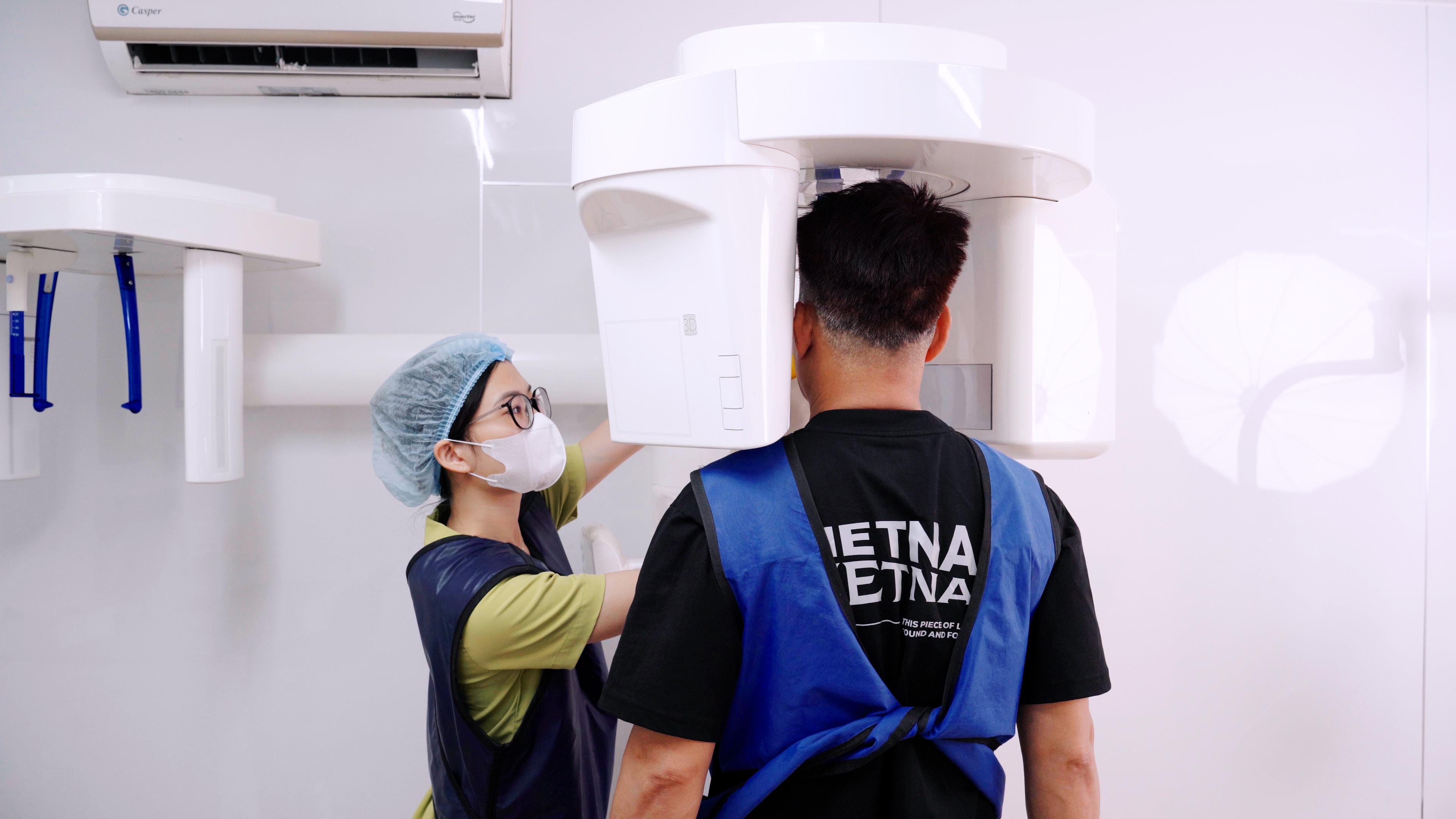
South Korea has been one of Asia’s leading medical tourism destinations for over two decades, with Seoul and Busan running sophisticated dental tourism programs targeting Japanese, Chinese, and Western patients. Vietnam, particularly Hanoi, has emerged as a competing destination that undercuts Korean prices while maintaining comparable clinical quality. This comparison helps you decide which is right for your case.
Price Comparison: Vietnam vs South Korea
| Procedure | Hanoi, Vietnam | Seoul / Busan, South Korea | Australia / UK / US |
|---|---|---|---|
| Single implant (Osstem) | $500–$900 | $800–$1,400 | $2,500–$5,000 |
| Single implant (Nobel Biocare / Straumann) | $900–$1,500 | $1,400–$2,500 | $4,000–$7,000 |
| All-on-4 (per arch) | $4,500–$8,500 | $8,000–$15,000 | $20,000–$40,000 |
| Porcelain veneers E.max (per tooth) | $150–$400 | $400–$800 | $1,200–$2,500 |
| Zirconia crown | $150–$350 | $300–$600 | $1,000–$2,000 |
| Invisalign (full case) | $1,500–$4,000 | $3,000–$6,000 | $5,000–$9,000 |
Summary: Vietnam prices are typically 40–60% lower than South Korea for equivalent procedures. Both are 60–85% below Western country prices.
For patients considering dental implants or full-arch restorations like All-on-4, the savings differential between Hanoi and Seoul can be substantial enough to cover return flights and a week of accommodation with money to spare.
Implant Brands: The Korean Connection
Here is an irony worth noting: Osstem and MegaGen — the world’s most widely used mid-range implant brands in Vietnam — are South Korean companies. When a Hanoi clinic places an Osstem implant for $600, the fixture itself is a Korean product. Going to Seoul for the same Osstem implant costs $900–$1,200.
The premium in South Korea reflects higher clinic operating costs, more sophisticated marketing infrastructure, and the tourism premium of the Korean medical tourism industry — not better implant hardware.
For Nobel Biocare and Straumann cases, both countries offer the same Swiss and Swedish fixtures at substantially different price points. Clinics such as Picasso Dental Old Quarter and Australian Dental Clinic stock the full range of premium implant systems, allowing patients to choose the brand that matches their budget and clinical requirements without travelling to Seoul to access it.
Language and Communication
Vietnam (Hanoi): International clinics operate in English. Clinical staff at established international clinics have English-speaking dentists and patient coordinators. Consultations, treatment planning, and aftercare instructions are handled in English without reliance on translation apps.
South Korea (Seoul/Busan): Medical tourism clinics in Seoul’s Gangnam district and Sinchon area have English-speaking staff and dedicated international patient departments. Language support is excellent at major medical tourism clinics. Some smaller clinics rely on written translation apps or in-house interpreters.
Both countries offer English-language care at established dental tourism clinics. The language advantage is roughly neutral for English-speaking patients. Where Hanoi differs is scale: international clinics here are smaller and more personal, which some patients find preferable to the high-volume processing typical of major Seoul tourism dental chains.
Flight Logistics
| From | To Vietnam (Hanoi) | To South Korea (Seoul) |
|---|---|---|
| Sydney | ~9 hours direct | ~10 hours direct |
| London | ~11 hours direct | ~11 hours direct |
| Los Angeles | ~17 hours (1 stop) | ~12 hours direct |
| Singapore | ~2 hours direct | ~6.5 hours direct |
| Auckland | ~11 hours (1 stop) | ~12 hours direct |
South Korea has a direct-flight advantage from North America. Korean Air and Asiana serve LAX, SFO, JFK, and other US cities non-stop, making Seoul more accessible than Hanoi for American patients seeking an Asian dental destination.
For patients flying from Australia, New Zealand, the United Kingdom, or Southeast Asia, Hanoi is equally accessible and often cheaper to reach. Budget carriers operating throughout Southeast Asia make Hanoi an easy add-on from regional hubs such as Singapore, Bangkok, and Kuala Lumpur.
When flight cost is factored into total trip budget, the price advantage of Vietnam over South Korea often widens further for non-American patients.
Clinical Quality Comparison
Both Vietnam and South Korea have strong dental education systems and internationally trained specialists. The relevant comparison is at the clinic level, not the country level.
| Factor | Top Hanoi Clinics | Top Seoul Clinics |
|---|---|---|
| Implant brand range | Osstem, MegaGen, Nobel, Straumann | Osstem, MegaGen, Nobel, Straumann |
| CBCT imaging | Standard at all featured | Standard at major medical tourism clinics |
| CAD/CAM in-house | Multiple clinics | Most major tourism clinics |
| ISO certification | Available at select clinics | Multiple (Gangnam medical tourism zone) |
| English communication | High at international clinics | High at major tourism clinics |
| International patient volume | Growing rapidly | Hundreds of thousands annually (country-wide) |
The quality ceiling is comparable between the two markets. Both can deliver implants, porcelain veneers, crowns, and full-arch restorations to an internationally acceptable standard when the right clinic is selected. The differentiator is price — Vietnam consistently offers comparable clinical outcomes at 40–60% lower cost.
South Korea’s advantage lies in its medical tourism infrastructure at scale: if you need a rare specialist, a complex multi-disciplinary case, or concurrent medical procedures (such as dermatology or orthopedic surgery alongside dental work), Seoul’s medical ecosystem is more comprehensive. For the majority of dental tourism cases — implants, veneers, All-on-4, crowns, and orthodontics — a well-chosen Hanoi clinic delivers the same result at a lower price.
Cost of Living During Treatment
For multi-visit or extended treatment plans, daily living costs matter. Hanoi has a significant edge here.
A comfortable hotel near the Old Quarter or West Lake runs $40–$90 per night. Restaurant meals at good mid-range restaurants cost $5–$15. A clinic transfer by taxi or ride-share is $2–$5. Patients spending two to three weeks in Hanoi for an All-on-4 case or a full veneer set can do so for a total accommodation and food budget of $700–$1,500 — a fraction of equivalent costs in Seoul, where a comfortable hotel in the medical tourism zone (Gangnam) costs $120–$250 per night.
This cost-of-living differential reinforces the case for Vietnam, particularly for treatments requiring multiple clinic visits over one to three weeks.
Which Destination Suits Which Patient?
Choose Vietnam (Hanoi) if:
- You are flying from Australia, New Zealand, the UK, Europe, Singapore, or Hong Kong
- Cost reduction is the primary driver alongside clinical quality
- You want a culturally immersive travel experience alongside treatment — Hanoi’s Old Quarter, street food, and day-trip options make recovery time enjoyable
- You prefer a smaller, more personal clinic environment over high-volume tourism processing
- Your treatment needs are implants, veneers, All-on-4, crowns, or orthodontics
Clinics worth considering in Hanoi include Picasso Dental Old Quarter, Australian Dental Clinic, Westcoast International Dental, and Greenfield Dental, all of which serve international English-speaking patients.
Choose South Korea if:
- You are flying from the USA or Canada, where direct flights to Seoul are significantly faster than connections to Hanoi
- You want maximum medical tourism infrastructure, specialist depth, and the ability to combine procedures across dental, dermatology, and other specialties
- You specifically want Korean-language dental staff or are already comfortable in a Korean-language environment
- You are combining dental work with other Korean medical procedures where Seoul’s medical complex offers genuine advantages
- You prefer a large metropolitan experience and are less focused on cost savings
The Verdict: Value Analysis
For the majority of international patients considering Asia for dental work, Vietnam offers better overall value than South Korea. The price differential — 40–60% lower for identical procedures using identical implant brands — combined with comparable clinical quality, English-language care, and competitive flight times from most non-American origins makes Hanoi a stronger value proposition for the typical dental tourism case.
The exception is North American patients, for whom Seoul’s direct-flight network and marginally shorter total travel time may justify the higher clinic costs, particularly if the total treatment cost is modest (a single implant or a few crowns rather than a full-arch case).
For larger cases — All-on-4, full-mouth reconstruction, or eight or more veneers — the savings available in Hanoi are large enough to justify the extra flight connection even from North America. A $6,000 saving on an All-on-4 case covers multiple connecting flights and several weeks of comfortable accommodation.
Related Reading
- Top 6 Dental Clinics in Hanoi
- Dental Implant Brands in Hanoi
- Vietnam vs USA Dental Tourism
- Dental Implants in Hanoi
- All-on-4 Dental Implants in Hanoi
- Hanoi Dental Prices 2026
- How to Choose a Dental Clinic in Hanoi
Sources
- Korean Medical Tourism Association, International patient statistics 2024
- Vietnam National Administration of Tourism, Medical tourism visitor data 2024–2025
- Osstem Implant Co., Global pricing and distribution documentation, 2024
- International Society of Aesthetic Plastic Surgery, Asia-Pacific Medical Tourism Report 2024