You were quoted a number that made your jaw drop — and not in a good way. Before you sign a treatment consent form at home, a dental consultation in Hanoi can cost you almost nothing and could change everything.
Why Patients Seek a Second Opinion in Hanoi
The pattern is consistent across dental tourism forums and patient communities. Someone in Sydney is quoted $45,000 for All-on-4 on both arches. A patient in London is told six porcelain veneers will cost $15,000. A Toronto resident is looking at $8,000 for two implants. The shock of that first quote is what sends people researching.
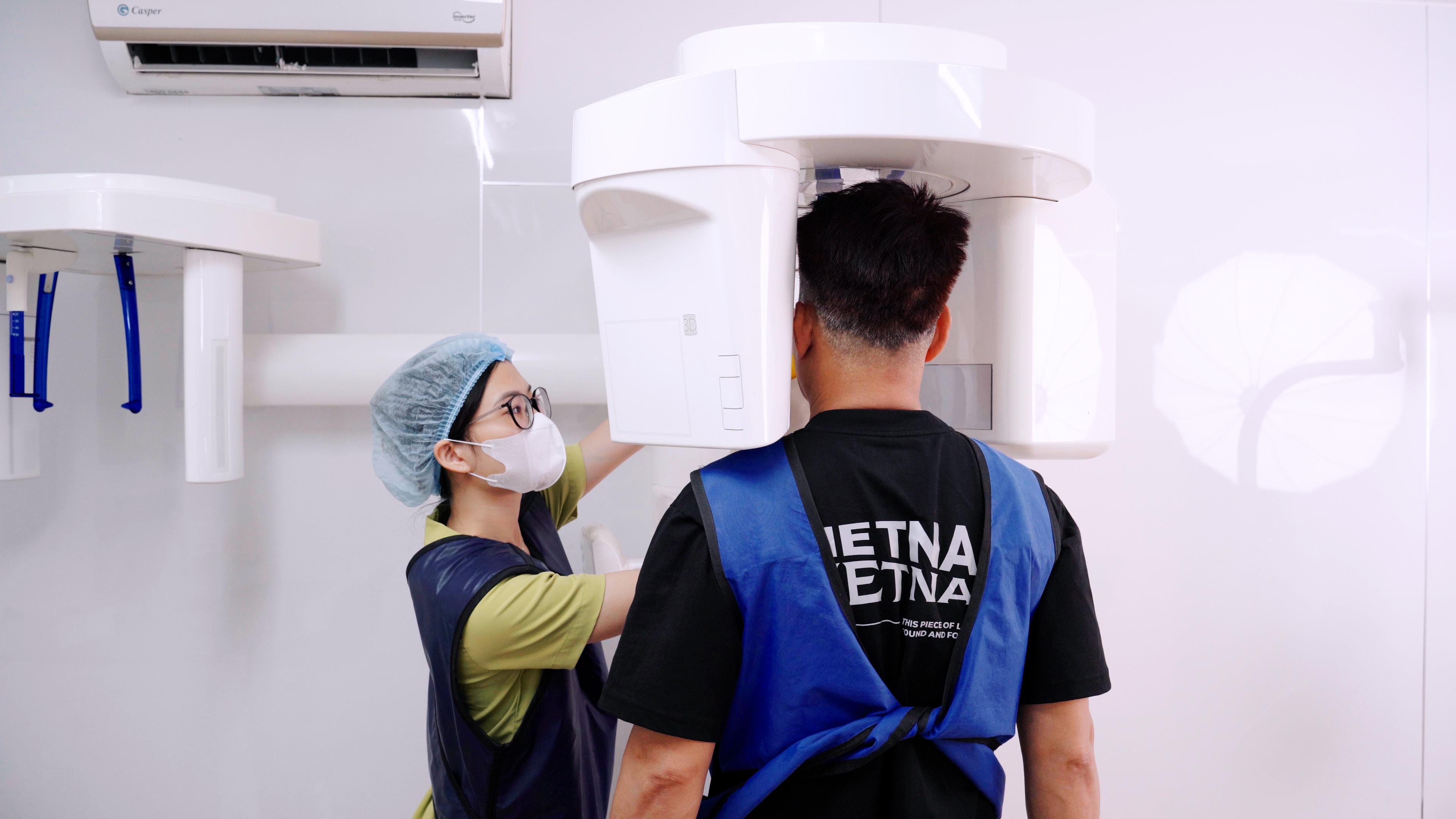
Hanoi has emerged as one of the most credible destinations for dental second opinions because the city has a high concentration of internationally accredited clinics, English-speaking dentists trained in Australia, the UK, and France, and a diagnostic infrastructure — including CBCT 3D imaging — that matches what you would find in any Western clinic.
Four Reasons to Get a Second Opinion in Hanoi
1. Consultations Are Free or Nearly Free
The barrier to a second opinion at home is often financial — your dentist charges a consultation fee, and there is an implicit awkwardness in asking a second dentist to review a colleague’s work. In Hanoi, almost every major international clinic offers a free initial consultation. If a CBCT scan is needed for a proper 3D assessment of bone density or implant positioning, expect to pay $30–$60 — a fraction of what the same scan costs in Australia, Canada, or the UK.
2. You May Need Less Work Than You Were Quoted
Over-treatment is a documented phenomenon in private dentistry. Research published in dental journals has found that treatment recommendations vary significantly between dentists examining the same patient, particularly for restorations, crowns, and implants. A Hanoi consultation may reveal that a tooth flagged for extraction could be saved with a root canal, that monitoring rather than crowning is appropriate, or that one implant — not two — is the right approach for your anatomy.
This is not about suggesting your home dentist is dishonest. It is about the reality that clinical judgment varies, and a second set of eyes using their own imaging equipment often produces a genuinely different assessment.
3. The Treatment Plan Has Value Even If You Don’t Proceed
A written, itemised treatment plan from a reputable Hanoi clinic is a negotiating document. Patients regularly return home, present the Hanoi quote to their dentist, and find that prices are suddenly more flexible or that elements of the treatment plan shift. Even if you never book a flight to Vietnam for treatment, the document has practical utility.
4. If You’re Already Visiting Vietnam, the Calculus Is Simple
If Vietnam is already on your travel itinerary, a dental consultation adds almost no marginal cost to your trip. A 60–90 minute appointment on your first or second day in Hanoi, followed by the freedom to explore the Old Quarter, Hoan Kiem Lake, and the city’s food scene while you think it over, is an entirely reasonable use of a morning. See how to combine a holiday with dental treatment for practical guidance on structuring this.
How to Prepare for Your Hanoi Consultation
Arriving prepared produces a dramatically better second opinion. Here is what to do before you leave home.
Request your records. In Australia, Canada, the UK, the US, and most EU countries, patients have a legal right to their dental records, including X-rays. Contact your dentist’s office and ask for digital copies (usually sent via email or a secure link). If they push back, reference your country’s patient data rights legislation.
Bring the written treatment plan and quote. A verbal quote is not useful. You need the written plan that lists each procedure by name, preferably with tooth numbers.
Document your symptoms. Note any pain, sensitivity, or discomfort — where it is, how long you have had it, whether it is constant or triggered by temperature or pressure, and what previous treatments have been done on those teeth.
Prepare questions. Useful questions include: Is this treatment urgent or elective? What happens if I wait 6–12 months? What is the most conservative approach? What imaging are you basing this on?
What Hanoi Clinics Actually Assess
A thorough second-opinion consultation at a reputable Hanoi clinic typically includes:
- CBCT 3D scan — assesses bone volume for implants, root anatomy, sinus proximity
- Periodontal assessment — gum health, pocket depths, bone loss grading
- Bite and occlusion analysis — especially relevant for full-arch restorations and veneers
- Clinical photography — creates a visual baseline and supports treatment planning
- Review of your existing X-rays and treatment plan — the dentist compares their findings with what was recommended at home
Common Findings in Second-Opinion Consultations
Patients who have documented their Hanoi consultation experiences commonly report a few recurring patterns:
- Work quoted as urgent is found to be premature — monitoring is recommended instead
- Restorations (fillings, inlays) are recommended where crowns were originally quoted, at significantly lower cost
- Implant brands quoted at home carry a 400–600% markup over the equivalent implant material used in Hanoi with equivalent or superior clinical outcomes
- Full-arch cases (All-on-4) occasionally reveal that a patient’s bone density supports a more conservative partial solution that was never offered at home
What Happens If the Two Diagnoses Are Different?
This is the question patients most often worry about. If your Hanoi dentist recommends something different from your home dentist, it does not automatically mean one of them is wrong.
Ask the Hanoi clinic to explain, using the imaging, exactly what they see and why they are recommending what they are recommending. Get this in writing. When you return home, present both plans to your original dentist and ask them to address the specific discrepancies. A confident dentist with a sound diagnosis will be able to explain their reasoning clearly.
If you remain uncertain, a third opinion — from a dentist at home who has no financial stake in the treatment — is a reasonable step before committing to major procedures.
Hanoi Clinics With Strong Second-Opinion Consultations
Several Hanoi clinics have built a reputation specifically among dental tourists seeking second opinions:
- Picasso Dental Clinic (Old Quarter) — central location, CBCT on-site, English-speaking team
- Picasso Dental Clinic (Westlake) — popular with longer-stay patients, comprehensive diagnostics
- Australian Dental Clinic — Australian-standard protocols, familiar to patients arriving from Sydney or Melbourne
- Westcoast International Dental — strong implant and full-arch assessment capability
- Greenfield Dental — international patient focus with detailed written treatment plans
For a full comparison, see the top 6 dental clinics in Hanoi.
Related Reading
- Is dental work in Vietnam safe?
- Dental trip cost breakdown: Hanoi
- Hanoi dental prices 2026
- How much can you save on dental implants in Vietnam?
- Vietnam vs Turkey for dental tourism
Sources
- Vietnam National Institute of Odonto-Stomatology — clinical guidelines and patient record access protocols, 2024
- Hanoi Department of Health — licensed international dental clinic registry, 2025
- Journal of Evidence-Based Dental Practice — variability in treatment recommendations across private dental practitioners, Vol. 23, 2023
- Vietnam Tourism Authority — international patient arrival and medical tourism expenditure data, 2025