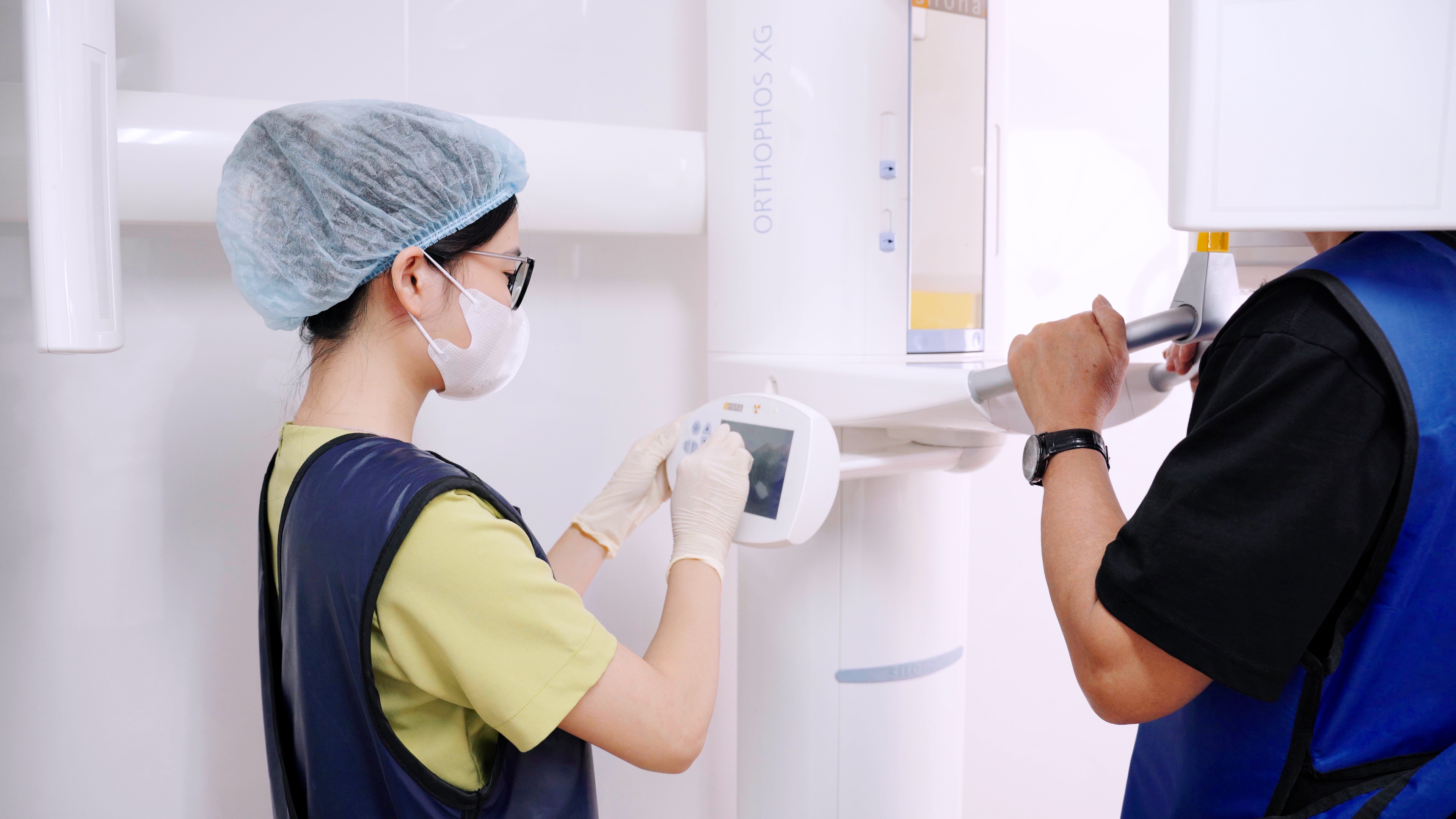
Wondering whether the money you spend on dental treatment in Hanoi could come back to you at tax time? It is a fair question — and the honest answer is that it depends heavily on where you pay tax and what kind of work you have done. This guide walks through the rules country by country so you know what to ask your accountant before you book.
First, an Important Disclaimer
This article is general guidance for dental tourists, not tax advice. Tax law changes, and your eligibility depends on your full financial picture. Before you claim anything, confirm the specifics with your national tax authority or a qualified tax professional in your country. Nothing here should be treated as a guarantee of deductibility.
The Universal Rule: Medical Necessity Beats Cosmetics
Across every country covered below, one principle holds: tax authorities distinguish medically necessary treatment from purely cosmetic procedures. A dental implant replacing a lost tooth, a root canal saving an infected tooth, or a crown restoring a damaged one has a far stronger case than veneers chosen purely to improve appearance. Where treatment serves both function and aesthetics, the position becomes fact-specific — another reason to keep detailed records.
Country-by-Country Guide
| Country | Mechanism | Overseas Dental Eligible? | Key Condition |
|---|---|---|---|
| United States | Itemised medical expense deduction | Often, if medically qualifying | Total medical costs must exceed 7.5% of adjusted gross income |
| United Kingdom | No general personal relief | Rarely | HMRC does not allow routine personal dental costs as a deduction |
| Australia | Net medical expenses tax offset (abolished) | No, for general dental | Offset removed from 2019; no replacement for general dental |
| Canada | Medical Expense Tax Credit (METC) | Possibly | Must be an eligible expense with valid receipts; thresholds apply |
United States: The Most Realistic Route
The IRS allows qualifying dental expenses to be included in the itemised medical expense deduction, and — importantly — it does not matter that treatment took place overseas. Implants, crowns, root canals and other restorative work generally qualify. Purely cosmetic procedures do not.
The catch is the 7.5% of adjusted gross income (AGI) threshold: only the portion of your total medical costs above that line is deductible, and you must itemise rather than take the standard deduction. For many travellers, combining a dental implant at $500–$1,500 or an All-on-4 arch at $4,500–$9,000 with other medical costs in the same year is what pushes them over the threshold.
If you hold an FSA or HSA, those funds can also be applied to qualifying overseas dental costs — a separate benefit from the deduction itself.
United Kingdom: Little Room to Manoeuvre
HMRC does not generally permit individuals to deduct personal dental treatment, whether at home or abroad, from their income tax. The UK has no equivalent of the US itemised medical deduction for routine personal healthcare. The narrow exceptions tend to involve treatment that is genuinely a business expense — rare and tightly defined. For most UK dental tourists, the realistic saving comes from Hanoi’s prices themselves, not from a tax claim.
Australia: The Offset Is Gone
Australia previously offered the net medical expenses tax offset, which some patients used for dental costs. That offset was phased out and abolished from the 2019–20 financial year for general expenses, with no replacement for routine or cosmetic dental work. As a result, treatment in Hanoi is not deductible against Australian income tax for most patients. Your Extras health cover, rather than the tax system, is the avenue worth exploring for any partial reimbursement.
Canada: The Medical Expense Tax Credit
Canada’s Medical Expense Tax Credit (METC) can include certain dental expenses, and the Canada Revenue Agency does not automatically exclude treatment received outside Canada. Eligible procedures may be claimed provided you have valid receipts and meet the credit’s thresholds, which are based on a percentage of net income. As with the US, cosmetic-only work is excluded. Review the CRA’s list of eligible expenses, or ask a Canadian tax preparer, before claiming a Hanoi crown or root canal.
What Records to Keep — Whatever Your Country
The single most valuable habit is collecting documentation at the time of treatment, not months later. Ask your Hanoi clinic for:
- An itemised receipt listing each procedure and its individual cost
- Proof of payment — card statement, bank transfer record, or stamped receipt
- The clinic’s official invoice on letterhead, in English
- A short treatment summary from your dentist describing what was done and why
Reputable Hanoi clinics — including Picasso Dental, Australian Dental Clinic, and Westcoast International Dental — routinely issue English-language itemised invoices for overseas patients, so request these before you fly home.
The Bigger Picture
Even where no deduction is available, the underlying economics of treating in Hanoi remain compelling. Dental work in Hanoi runs roughly 60–85% cheaper than in the US, UK or Australia, and top clinics report implant success rates of 95–98%. A tax deduction, where you qualify, is a bonus on top of savings that already justify the trip. Compare verified clinics, real prices and patient reviews on SmileJet before you decide.
Related Reading
- Does Your Travel Insurance Cover Dental Treatment in Vietnam?
- Hanoi Dental Prices 2026 — Full Treatment Price List
- Is Dental Work in Vietnam Safe?
- How Long Should You Stay in Hanoi for Dental Implants?
- Combining a Holiday with Dental Treatment in Hanoi
Sources
- IRS Publication 502 — “Medical and Dental Expenses,” irs.gov (2025 edition)
- Canada Revenue Agency — “Medical Expenses You Can Claim” guidance, canada.ca (2025)
- Australian Taxation Office — net medical expenses tax offset phase-out notice (2019)
- HM Revenue & Customs — guidance on allowable personal expenses (2025)