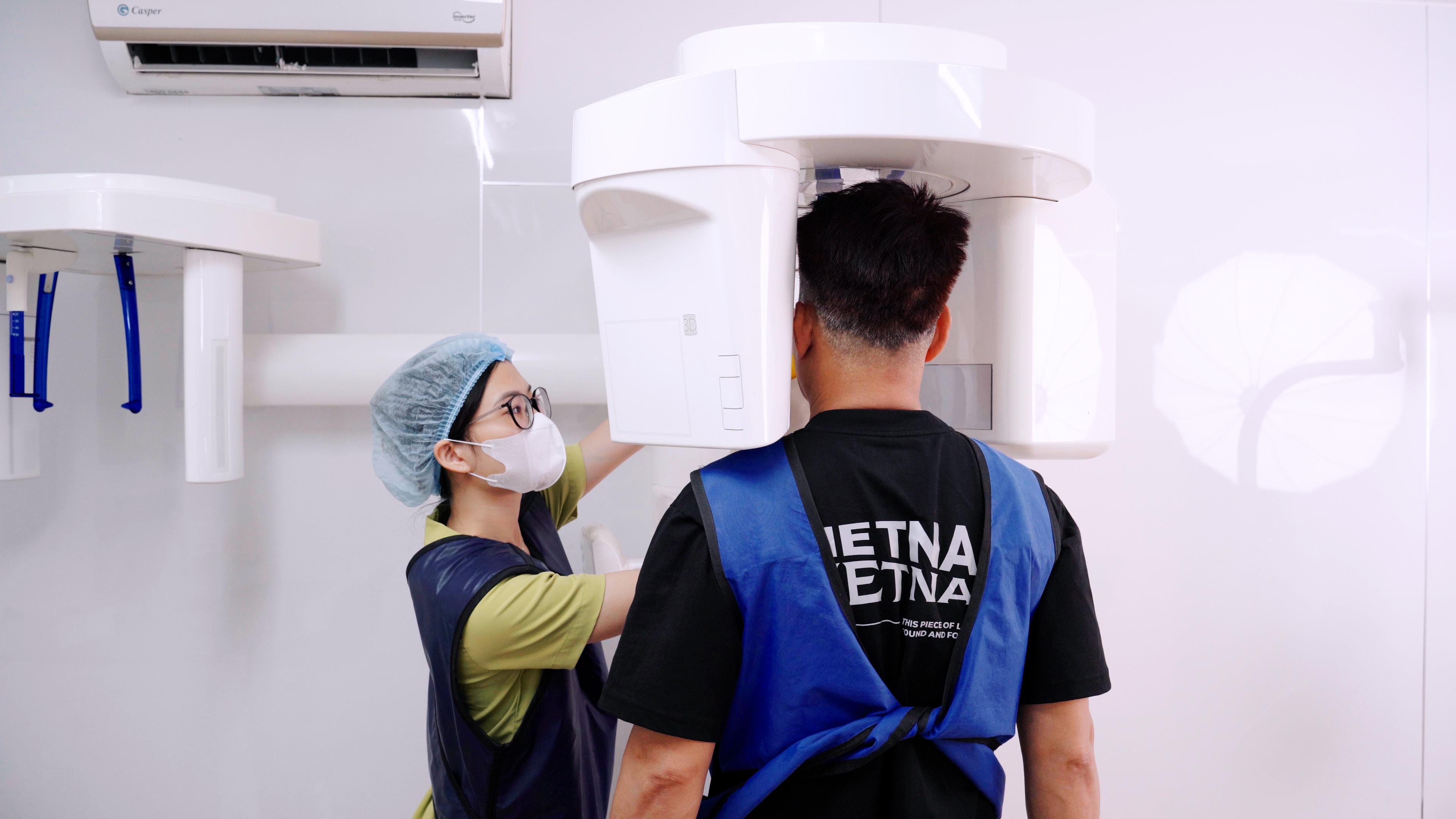
Ireland has a famously underfunded public dental system. The HSE scheme covers little more than emergency extractions, and waiting lists for even basic treatment can stretch months. Meanwhile, private dental implants in Dublin or Cork run €2,500–€5,000 per tooth — among the highest rates in the EU. Hanoi has emerged as the most logical destination for Irish dental tourists: no visa required, a 14–16 hour routing via the Gulf, and the same Straumann or Nobel Biocare implant for €650–€1,400.
This guide covers everything an Irish patient needs to plan a Hanoi dental trip in 2026: the state of Irish public dentistry, EUR price comparisons, flight routing, clinic recommendations, visa rules, and insurance realities.
The Irish Dental Landscape
Irish dental care divides into two tiers, and neither serves patients needing restorative work particularly well.
The HSE scheme, accessible via the PRSI Dental Treatment Benefit, provides an annual examination and a subsidised scale-and-polish. It does not cover implants, crowns, bridges, or any cosmetic procedure. For anything beyond a check-up and clean, Irish patients are directed to private dentistry — and private dentistry in Ireland is expensive.
A single implant at a reputable Dublin or Cork private practice typically costs between €2,500 and €5,000, depending on complexity and the implant brand used. A full-arch All-on-4 restoration can reach €18,000–€35,000 per jaw. For patients needing multiple teeth replaced, the total bill can exceed what many Irish households spend on a car.
Medical card holders have slightly broader entitlements, but restorative implant work remains firmly outside the public system. The practical result is that an Irish patient needing four implants faces a bill of €10,000–€20,000 with no realistic prospect of state support. That arithmetic is exactly why Hanoi has attracted growing numbers of Irish patients over the past five years.
EUR Price Comparison: Ireland vs Hanoi
The savings available in Hanoi are not marginal — they are structural. Top Hanoi clinics use the same implant brands as Irish private practices (Straumann, Nobel Biocare, Osstem) but operate in a lower-cost economy. Staff, premises, and overheads are a fraction of Dublin costs, and that difference flows directly to the patient.
| Procedure | Ireland Cost (EUR) | Hanoi Cost (EUR approx.) | Saving (EUR) |
|---|---|---|---|
| Single implant (Nobel Biocare) | €3,000–€5,000 | €840–€1,300 | €2,160–€3,700 |
| All-on-4 (per arch) | €18,000–€35,000 | €4,200–€7,900 | €13,800–€27,100 |
| Porcelain veneers E.max (per tooth) | €900–€1,800 | €140–€370 | €760–€1,430 |
| Zirconia crown | €800–€1,500 | €140–€325 | €660–€1,175 |
| Full smile makeover (8–10 veneers) | €8,000–€18,000 | €1,200–€3,500 | €6,800–€14,500 |
Exchange rate: 1 EUR ≈ 1.08 USD. Rates fluctuate — verify live rates before booking treatment.
A patient combining four implants with a set of veneers could realistically save €12,000–€20,000 in a single trip, even after accounting for flights, accommodation, and ten days in Hanoi. For many Irish patients, the trip pays for itself many times over.
Flights from Dublin to Hanoi
There are no direct Dublin–Hanoi services. The journey requires one stop, and the best options all route through the Gulf or major European hubs. Travel time is 14–18 hours depending on the connection chosen.
| Route | Airline | Total Time | Approx. Cost Return |
|---|---|---|---|
| DUB → Abu Dhabi (AUH) → Hanoi | Etihad | ~14.5 hours | €700–€1,200 |
| DUB → Dubai (DXB) → Hanoi | Emirates | ~15–16 hours | €750–€1,300 |
| DUB → London (LHR) → Hanoi | BA / Vietnam Airlines | ~17 hours | €700–€1,100 |
| DUB → Frankfurt (FRA) → Hanoi | Lufthansa / Vietnam Airlines | ~17–18 hours | €800–€1,300 |
The Etihad route via Abu Dhabi is the shortest and most popular among Irish dental tourists. Abu Dhabi Etihad connections to Hanoi are generally smooth, and the total travel time of around 14.5 hours compares favourably to longer European routings.
Hanoi is served by Noi Bai International Airport (IATA: HAN), located about 30 kilometres north of the city centre. Grab is the standard taxi app; the ride to the Old Quarter or West Lake takes 35–50 minutes and costs approximately €5–€10.
Book at least 8–10 weeks in advance for the best fares. Travelling mid-week and avoiding Irish school holiday periods (July–August, Christmas) reduces both airfare and Hanoi hotel costs.
Recommended Hanoi Clinics for Irish Patients
Irish patients benefit from clinics with strong English-language communication, international implant brands, and transparent pricing. The following four clinics consistently meet those standards.
Picasso Dental Clinic — Old Quarter
Picasso Dental Old Quarter holds a 5.0 Google rating across thousands of international patient reviews. The clinic is ISO 9001 certified and has treated over 70,000 international patients. It uses Nobel Biocare and Straumann fixtures and provides digital treatment planning with CBCT scanning. This is the default recommendation for most Irish patients visiting Hanoi for implant work. A second branch at West Lake (Picasso Dental Westlake) handles overflow and longer restorative cases.
Australian Dental Clinic
Australian Dental Clinic is English-first by design, with Australian-standard clinical protocols and a team accustomed to patients from English-speaking countries. The clinic’s communication style — clear, written treatment plans in English, prompt email responses, thorough aftercare instructions — makes it particularly comfortable for Irish patients accustomed to high-standard dental communication. It carries a 4.8-star Google rating from a large volume of international reviews.
Westcoast International Dental
Westcoast International operates under foreign-invested clinical management with a multilingual team. It is the strongest option for complex restorative cases: full-arch reconstruction, combined implant and orthodontic treatment, or cases requiring extensive bone grafting. The clinic’s international management structure means pricing and treatment protocols are documented to a high standard.
Greenfield Dental and Minh Thu Dental
Greenfield Dental offers competitive pricing on veneers and cosmetic work, with a modern facility in the Ba Dinh district. Minh Thu Dental is a strong choice for patients prioritising value on straightforward implant cases while maintaining international implant brands.
All five clinics accept EUR via international bank transfer and all major credit cards, including Visa and Mastercard issued by Irish banks. Confirm payment options during your initial remote consultation.
How to Plan Your Hanoi Dental Trip
Step 1: Remote Consultation
Send your dental X-rays, CBCT scan (if you have one), and a description of your needs to two or three clinics before booking flights. Most top Hanoi clinics respond within 24–48 hours with a written treatment estimate. This step is essential — it lets you budget accurately and compare clinics before committing to flights.
Step 2: Budget Your Total Trip Cost
A representative budget for an Irish patient travelling to Hanoi for four implants:
- Flights (return, Dublin via Gulf): €800–€1,200
- Accommodation (10 nights, mid-range hotel): €400–€700
- Dental treatment (4 implants, Nobel Biocare): €3,360–€5,200
- Food, transport, and incidentals: €400–€600
- Total: approximately €4,960–€7,700
The same four implants at an Irish private clinic: €10,000–€20,000, before any incidentals.
Step 3: Plan Your Stay
Implant treatment requires two distinct phases: fixture placement and, after osseointegration, crown attachment. Some Irish patients complete both phases in a single extended trip (10–14 days) using temporary crowns, then return for permanent crowns several months later. Others complete the full course in two separate trips.
For veneers or crown work, a single 7–10 day stay is usually sufficient.
Hanoi itself is an excellent base. The Old Quarter is compact and walkable, with strong café culture, excellent street food, and comfortable mid-range hotels at €40–€80 per night. West Lake offers a quieter alternative. Both are convenient to the major clinics.
Visa and Entry for Irish Citizens
Irish passport holders receive 45-day visa-free entry to Vietnam with no advance application required. Present your Irish passport at the immigration counter at Noi Bai Airport and receive your stamp.
Requirements:
- Passport valid for at least 6 months beyond your intended departure date
- Return or onward flight ticket may be requested at immigration (standard practice)
- No proof of funds is routinely requested, but carry evidence of accommodation bookings
For stays beyond 45 days, the 90-day e-visa is available online at evisa.immigration.gov.vn for approximately USD 25 (around €23). The e-visa is processed within 3 business days and allows a single or multiple-entry stay.
Insurance Considerations for Irish Patients
Irish private health insurers — VHI, Laya Healthcare, and Irish Life Health — offer dental add-on plans that cover treatment at Irish providers only. None cover overseas elective dental treatment. Do not travel expecting any reimbursement from your Irish health insurer for Hanoi dental work.
Travel insurance typically excludes pre-planned medical and dental treatment. Read the policy exclusions carefully before purchasing — the key phrase to look for is “pre-existing condition” or “elective treatment exclusion.” Most standard policies will not cover your implants or veneers.
What travel insurance does cover is emergency remedial treatment if something goes wrong after you return to Ireland. Keep all itemised receipts in English from your Hanoi clinic — these will be required by your Irish dentist or any insurer if follow-up care is needed.
One practical step: before travelling, get a written treatment record from your Irish dentist noting your current dental status. After treatment in Hanoi, get a comprehensive written discharge summary from the Hanoi clinic including implant brand, batch number, and post-operative instructions. These documents protect you if you need follow-up care from an Irish dentist.
What to Expect from Hanoi Clinics
Top Hanoi clinics serving international patients have invested heavily in communication infrastructure precisely because their business depends on foreign patients arriving from thousands of kilometres away. Irish patients can typically expect:
- Remote consultation via email or WhatsApp before travel, with written treatment plan and itemised pricing in USD or EUR
- CBCT scanning on arrival to verify remote assessment
- English-speaking dentists and patient coordinators throughout treatment
- Written aftercare instructions in English
- Post-treatment contact by email or WhatsApp if questions arise after returning to Ireland
The standard of clinical equipment at top Hanoi clinics — digital X-ray, CBCT, CAD/CAM milling, implant torque tools — matches what you would find at a modern Irish private dental practice. The difference is entirely in cost, not in equipment or implant brand.
Related Reading
- Top 6 Dental Clinics in Hanoi
- Dental Implants in Hanoi
- All-on-4 in Hanoi
- Porcelain Veneers in Hanoi
- Hanoi Dental Prices 2026
- Dental Financing for Treatment Abroad
- Is Dental Work in Vietnam Safe?
Sources
- Irish Dental Association, Private Dental Fee Survey 2024
- HSE Dental Treatment Benefit Scheme documentation, 2025
- Etihad Airways, Dublin–Abu Dhabi–Hanoi route schedule, 2026
- Vietnam Ministry of Foreign Affairs, Visa exemption for Irish citizens, 2025