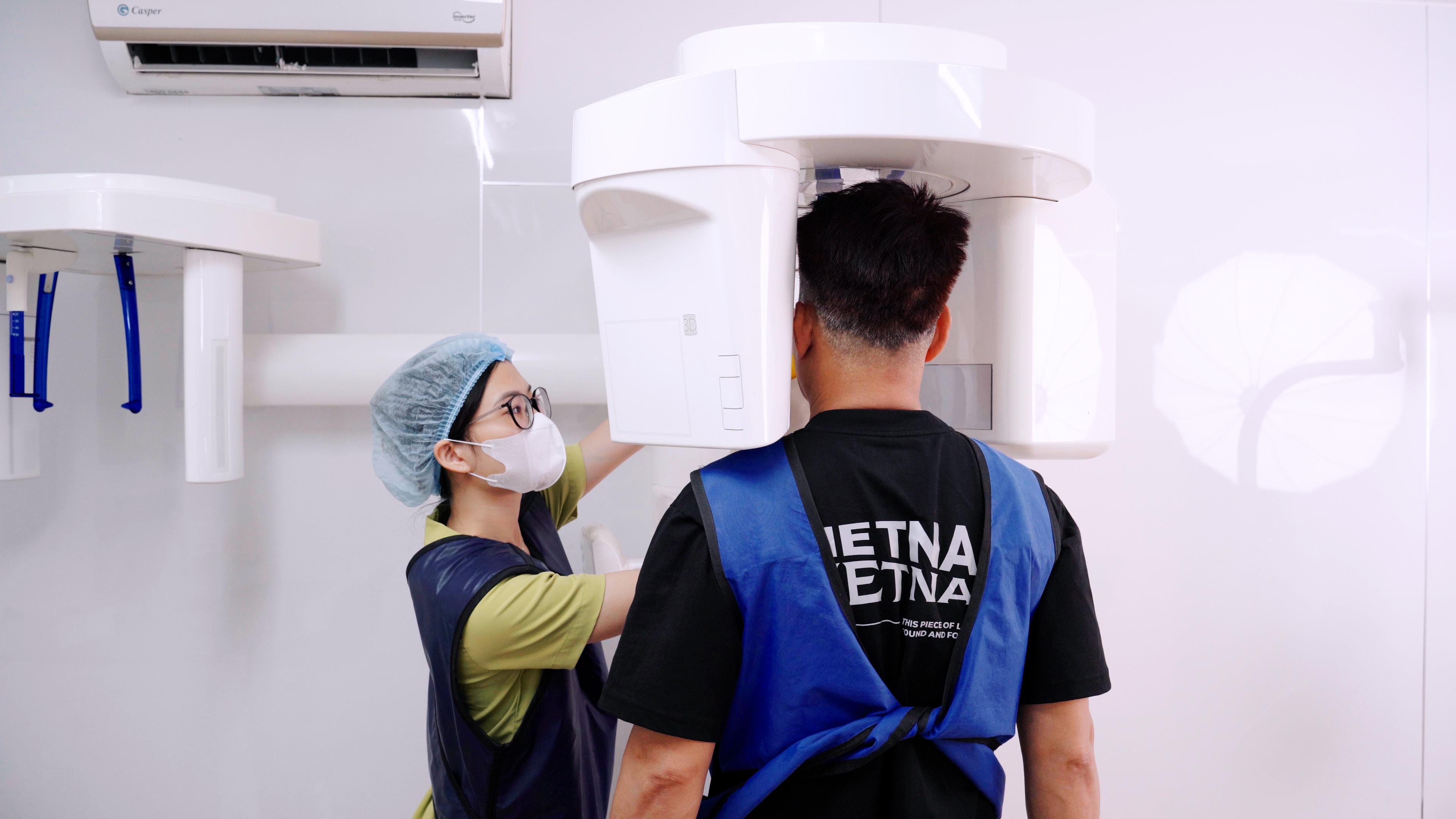
Invisalign is the treatment that surprises most dental tourists — in the best possible way. Unlike veneers, implants, or braces, it doesn’t lock you into weeks of appointments in Hanoi. The trays are manufactured before you ever set foot in a clinic chair, and when you leave after Visit 2, you take every single one home with you.
Here is exactly how the timeline works.
Why Invisalign Is Different for Dental Tourists
With most dental treatments, “how long do you need to stay?” has a direct answer. Veneers take 5–7 days. Braces require ongoing monthly check-ups for 18–24 months — which makes them a poor fit for dental tourism in most cases.
Invisalign breaks that pattern. The treatment is built around manufactured aligner trays that your teeth move through progressively. Once the trays are made and fitted, you take all of them home and wear them in sequence. Your dentist in Hanoi only needs to see you in person twice — and the total time in the city adds up to roughly 5–8 days spread across two short visits.
The Two-Visit Structure
Visit 1 — Scan and ClinCheck (3–5 Days in Hanoi)
This visit sets everything in motion.
Day 1: Consultation and iTero digital scan (approximately 1 hour). The iTero scanner captures a precise 3D model of your teeth — no impressions, no mess. This data is sent to Invisalign’s labs, where technicians build your personalised ClinCheck simulation: a digital animation showing how your teeth will move tray by tray.
Days 2–3 (or later, remotely): ClinCheck review and approval. The simulation is typically ready within 1–2 weeks. You can approve it via the clinic’s app or a video call from wherever you are — you do not need to be in Hanoi. If you prefer to see it in person, plan a 2-week first stay and review it before flying home.
After approval: Your aligner trays go into production. Manufacturing takes 3–4 weeks.
Practical note: Most patients fly home after the scan and approve their ClinCheck remotely. You then book flights back for Visit 2 once the trays are confirmed ready.
Visit 2 — Aligner Fitting and Pickup (2–3 Days, 3–5 Weeks After Visit 1)
This is the visit where treatment technically begins — and where dental tourism’s biggest advantage kicks in.
- Your dentist bonds small tooth-coloured attachments to certain teeth (these help the trays grip and apply precise pressure)
- Your first aligner set is fitted and checked
- You receive your complete set of trays — enough for 6 to 18 months of treatment
- Remote monitoring is set up so your Hanoi dentist can track progress via photos you submit from home
You leave Hanoi with everything you need. Treatment continues at home.
Optional Visit 3 — Mid-Treatment Refinements (2–3 Days, 6–8 Months Later)
Refinements are not always necessary, but around the halfway point some patients need minor adjustments — a new scan, a small batch of correction trays. If this applies to you, a short return visit of 2–3 days is sufficient.
One-Trip Option
If returning to Hanoi twice is impractical, ask clinics whether they offer a 3-week single-stay package. The structure looks like this:
- Arrive → scan on Day 1
- Wait in Hanoi (or take side trips in Vietnam) while ClinCheck is prepared
- Approve ClinCheck in-person around Week 2
- Collect finished aligners before departure in Week 3
Not every clinic can guarantee manufacturing turnaround within 3 weeks, so confirm this explicitly before booking flights.
Treatment Duration: Time Wearing Aligners at Home
The table below covers total treatment time — this is how long you wear the aligners after leaving Hanoi, not additional time in the city.
| Plan | Case Type | Approx. Trays | Treatment Duration | Hanoi Cost |
|---|---|---|---|---|
| Invisalign Lite | Mild crowding/spacing | 7–14 trays | 3–6 months | $1,500–$2,500 |
| Invisalign Moderate | Moderate misalignment | 15–25 trays | 6–12 months | $2,000–$3,000 |
| Invisalign Comprehensive | Complex cases | 26+ trays | 12–24 months | $2,500–$4,000 |
For context, the same treatments in the US, UK, or Australia typically cost $6,000–$12,000. Most patients save $4,000–$8,000 or more by treating in Hanoi — enough to cover flights and accommodation several times over.
Invisalign vs. Braces in Hanoi: Which Fits Your Trip?
Braces in Hanoi cost $800–$2,500 — significantly less than Invisalign — but they require regular tightening appointments every 4–6 weeks. That makes braces a poor fit for dental tourists unless you are relocating to Vietnam or plan frequent visits. Braces are worth considering only if your case is very severe and Invisalign isn’t clinically appropriate.
For anyone visiting Hanoi for a holiday or short-term trip, Invisalign is the clear choice for orthodontic treatment.
Choosing a Clinic
Clinics in Hanoi with confirmed iTero scanner capability and Invisalign certification include Picasso Dental Clinic (Old Quarter), Minh Thu Dental, Australian Dental Clinic, and Greenfield Dental. Confirm iTero availability when you enquire — it is standard at international-grade clinics but not universal.
Related Reading
- How Invisalign Works Step by Step in Hanoi
- Invisalign Treatment Page — Prices and Clinics
- Combine a Holiday with Dental Treatment in Hanoi
- How Many Days Do You Need in Hanoi for Dental Work?
- Hanoi Dental Prices 2026 — Full Treatment List
Sources
- Align Technology — Invisalign Provider Resources, ClinCheck and manufacturing timelines (align.com)
- International Association for Medical Tourism — dental tourism treatment planning guidelines (medicaltourism.com)
- Clinic pricing surveys conducted across Hanoi’s international dental district, Q1 2026