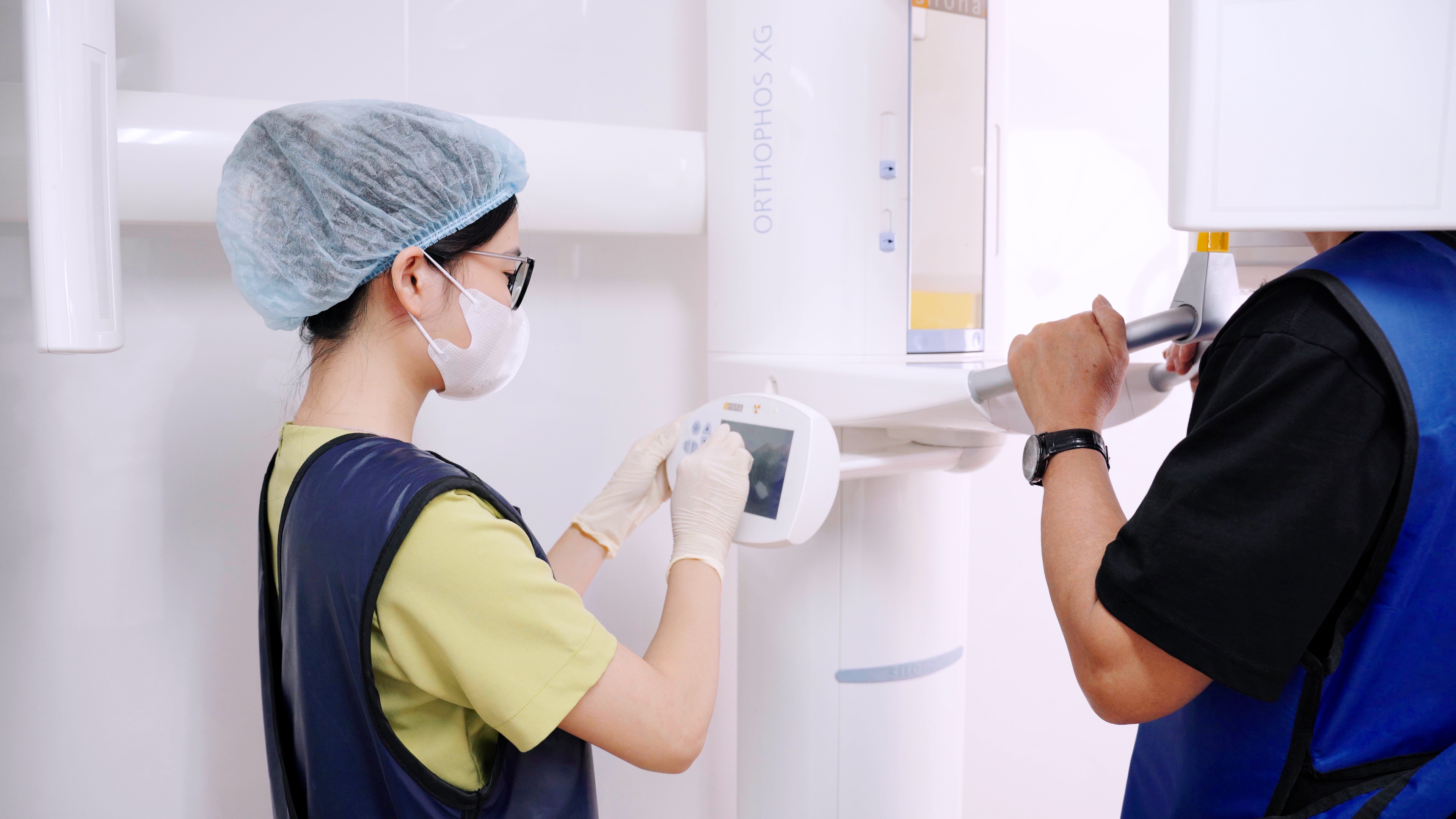
A full-mouth restoration is one of the bigger decisions in dental tourism, and the question almost everyone asks first is how much time it takes. The honest answer depends on whether your case is implant-based or restores natural teeth — but in nearly all situations, the clinical work is shorter than the travel planning around it. Here is exactly how to budget your time in Hanoi.
First, What Kind of Full-Mouth Restoration Do You Need?
“Full-mouth restoration” covers two quite different treatment paths, and they have different timelines.
The first is implant-based full-arch restoration — All-on-4, All-on-6, or All-on-X. This replaces all the teeth in an arch on a small number of implants. It involves surgery and a mandatory healing period, so it is a two-trip procedure.
The second is crown-and-bridge or veneer rehabilitation, where your natural teeth (or existing roots) are restored with crowns, bridges, and veneers. No implant surgery means no osseointegration wait, so this can often be completed in a single trip.
Your dentist confirms which path applies after a consultation and a 3D CBCT scan. Many real cases are a mix — for example, implants in the back of the mouth and crowns on healthy front teeth.
The Implant Path: Plan for Two Trips
Implant-based full-mouth work cannot be rushed anywhere in the world. The implants must fuse with the jawbone before permanent teeth are loaded. Most patients visiting Hanoi follow a two-trip protocol.
Trip 1 — Surgery and Fixed Temporaries (7–10 Days)
This is the main clinical event. Budget a minimum of 7 days; 10 is more comfortable.
- Day 1: Consultation, CBCT scan, treatment planning, and any needed cleaning or assessment. Your surgeon confirms you are a candidate.
- Days 2–3: Surgery — implants are placed and a fixed temporary arch is fitted, often the same day. You leave with a full set of teeth.
- Days 4–6: Recovery at your accommodation. Some swelling is normal. Hanoi is an easy, walkable city to rest in; stick to soft foods and avoid tap water.
- Days 7–9: Post-operative check. Your surgeon reviews healing, adjusts the temporaries, and clears you to fly home.
You return home with a complete, functional temporary arch. Most patients are surprised by how normal life feels during the months that follow.
Trip 2 — Permanent Arches (5–7 Days, 3–6 Months Later)
Once osseointegration is confirmed, you return for the final restoration.
- Day 1: Try-in. Your permanent zirconia arches are checked for fit, bite, and appearance.
- Days 2–3: Final fitting. The temporaries come off and the permanent teeth are secured.
- Days 4–5: Review and sign-off. You fly home with your finished smile.
Five to seven days suits most patients, with extra days optional for exploring the city.
The Crown-and-Bridge Path: Often One Trip
If your restoration uses crowns, bridges, and veneers on existing teeth, there is no surgical healing gap. A skilled clinic with an in-house lab can usually prepare teeth, take impressions, mill the restorations, and fit everything within 7–10 days. Complex cases with many units, or those needing root canals first, sit at the longer end of that range.
Timeline and Cost at a Glance
| Restoration Type | Trips | Days in Hanoi | Hanoi Cost (Approx.) |
|---|---|---|---|
| Full-arch implants (All-on-4/X, per arch) | 2 trips | 12–17 days total | $4,500–$9,000 |
| Single dental implant | 2 trips | 10–14 days total | $500–$1,500 |
| Full-mouth crowns (per crown) | 1 trip | 7–10 days | $80–$350 |
| Veneers (per tooth) | 1 trip | 5–7 days | from $150 |
| Root canal (if needed first) | 1 trip | 1–5 days | $70–$200 |
Any implant-based plan requires two trips because of osseointegration — no clinic anywhere can safely compress that biology. Be cautious of any provider promising permanent full-arch implants in three or four days.
Can It All Be Done in One Trip?
For implant cases, a small number of Hanoi clinics with in-house CAD/CAM labs offer an extended single stay of 12–14 days, covering surgery, healing, and final fitting in one visit. This costs slightly more and is worth asking about only if you genuinely cannot make two international trips. For most patients, two trips deliver better healing outcomes and a lower total cost. Crown-and-bridge restorations, by contrast, are routinely completed in one trip.
The Cost Equation
Hanoi dental work runs roughly 60–85% cheaper than the US, UK, or Australia. A full arch of implant-supported teeth that costs $25,000–$50,000 back home is $4,500–$9,000 per arch in Hanoi. Even with two return flights and accommodation, most patients save many thousands of dollars per arch.
The clinics most often used for this work — Picasso Dental, Australian Dental Clinic, Westcoast International Dental, Minh Thu Dental, and Greenfield Dental — report implant success rates of 95–98%, in line with the global figure of under 3% failure.
Practical Planning Tips
Book your consultation before your flights; surgery slots fill up, and you want dates confirmed first. Arrive a day before your Trip 1 consultation so jet lag does not affect planning. Use Grab for getting around, drink only bottled water, and consider travel insurance that covers dental complications. Currency runs about 25,500 VND to the US dollar, so carry a card and some cash for incidentals.
Related Reading
- Dental implants in Hanoi — treatment overview
- All-on-4 full-arch restoration
- How long do you need in Hanoi for All-on-4?
- How long to stay in Hanoi for dental implants
- Hanoi dental prices 2026
Sources
- International Team for Implantology (ITI) — consensus guidelines on full-arch implant treatment and osseointegration timing, 2025.
- Australian Dental Association — dental fee survey data, 2025.
- Vietnam National Hospital of Odonto-Stomatology — clinical protocols for implant-supported full-arch restorations, 2025.
- Journal of Prosthetic Dentistry — peer-reviewed outcomes for full-mouth rehabilitation, 2024.