Planning a full-arch restoration in Hanoi is one of the most cost-effective dental decisions an Australian or international patient can make — but the timeline is different from a simple crown or veneer trip. Here is exactly what to expect, day by day.
The Standard Protocol: Two Trips
All-on-4 is not a one-appointment procedure anywhere in the world. The implants need time to fuse with the jawbone before the permanent arch can be loaded. Most patients visiting Hanoi follow a two-trip protocol.
Trip 1 — Surgery and Temporary Arch (7–10 Days)
This is the main event. Budget a minimum of 7 days; 10 days is more comfortable.
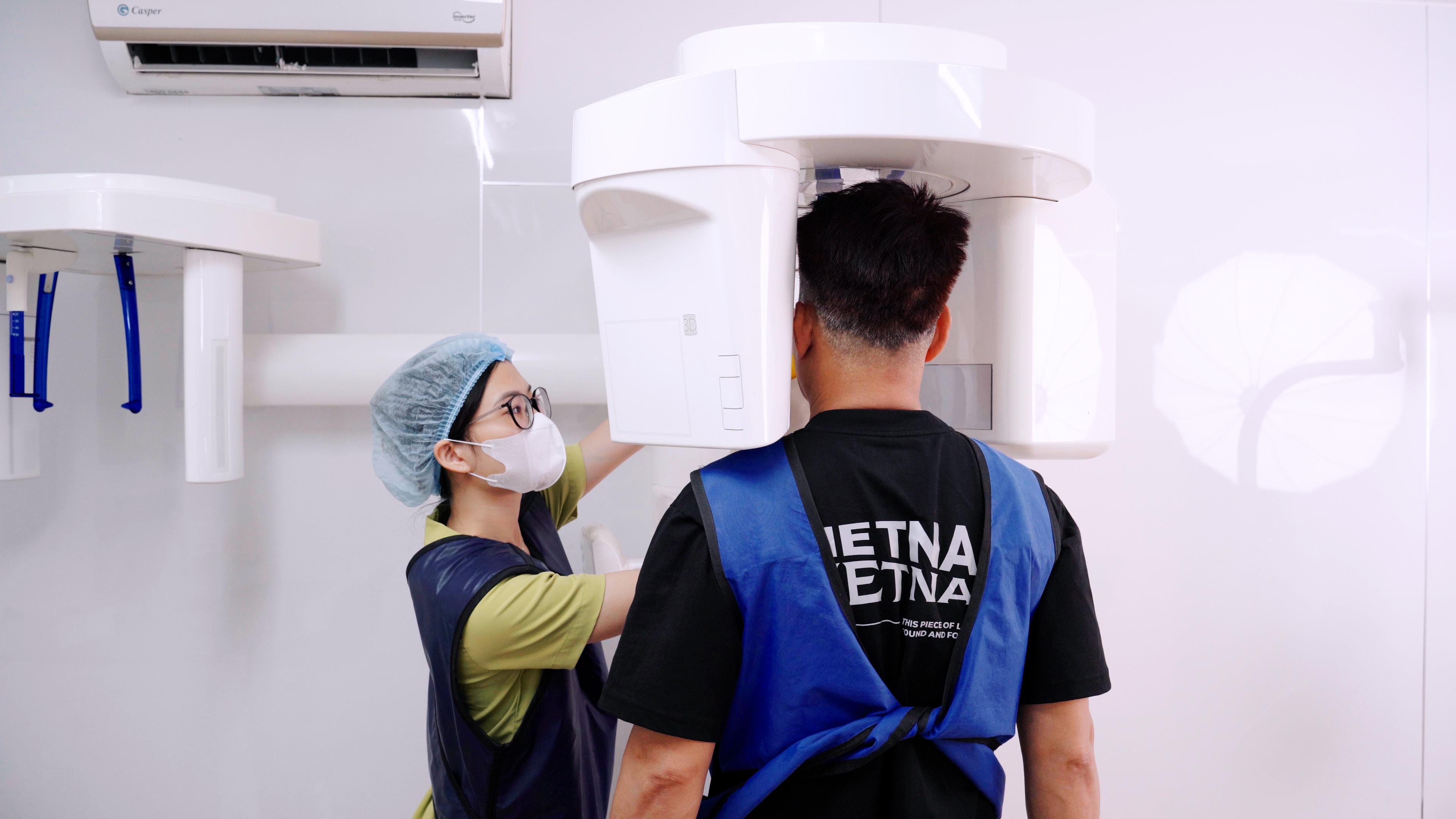
- Day 1: Consultation, 3D CBCT scan, treatment planning, and a review of your X-rays. Your surgeon confirms you are a candidate.
- Days 2–3: Surgery day — implants are placed and your temporary acrylic arch is fitted on the same day. You leave the clinic with a full set of teeth.
- Days 4–6: Recovery at your accommodation. Some swelling and tenderness is normal. Hanoi is an easy city to rest in; most patients take short walks and eat soft foods.
- Days 7–8: Post-operative check. Your surgeon reviews healing, makes any adjustments to the temporary arch, and clears you to fly. You go home.
You return to Australia (or wherever you live) with a complete, functional temporary arch. It looks good. It works. Most patients are surprised by how normal life feels during the months between trips.
Trip 2 — Permanent Zirconia Arch (5–7 Days, 3–6 Months Later)
Once osseointegration is confirmed — typically 3–6 months after surgery — you return for the final restoration.
- Day 1: Try-in appointment. Your permanent zirconia arch is checked for fit, bite, and aesthetics. Adjustments are made.
- Days 2–3: Final fitting and polish. The temporary arch is removed, the zirconia arch is secured.
- Days 4–5: Review appointment and sign-off. You fly home with your permanent teeth.
Five to seven days is enough for most patients. Some book a few extra days to explore Hanoi properly — it is a genuinely rewarding city to spend time in.
What About Completing Everything in One Trip?
A small number of Hanoi clinics have in-house CAD/CAM labs capable of milling a zirconia arch while you wait. In that case, an extended single stay of 12–14 days can cover surgery, healing, try-in, and final fitting.
This is worth asking about if you cannot make two international trips. Expect to pay slightly more — the convenience has a cost. Be specific when you enquire: ask whether the zirconia is milled in-house or sent to an external lab, and what the guaranteed turnaround time is.
For most patients, the two-trip protocol is the better choice. You get more healing time, better osseointegration outcomes, and a lower total cost.
How All-on-4 Compares to Other Dental Procedures
| Procedure | Trips Required | Total Days in Hanoi | Hanoi Cost (Approx.) |
|---|---|---|---|
| All-on-4 (per arch) | 2 trips | 12–17 days total | $4,000–$8,500 |
| Single dental implant | 2 trips | 10–14 days total | $500–$1,500 |
| Porcelain veneers (E.max) | 1 trip | 5–7 days | $150–$400 per tooth |
| Dental crown | 1 trip | 5–7 days | $120–$280 |
| Root canal | 1 trip | 1–5 days | $80–$180 |
Implant-based procedures always require two trips because of osseointegration — no clinic, anywhere, can safely compress that biology. Any clinic promising permanent implants in 3–4 days is cutting corners you do not want cut.
The Cost Equation
The total investment for All-on-4 in Hanoi — including both trips, accommodation, and flights — still lands well below what a single arch costs in Australia.
Australian clinics charge $25,000–$50,000 per arch. Hanoi clinics charge $4,000–$8,500 per arch. Even with two return flights from Sydney or Melbourne, most patients save $15,000–$35,000 per arch.
That saving is why the two-trip model makes sense for nearly every international patient who seriously runs the numbers.
Practical Tips for Planning Your Trip
Book your consultation before you book your flights. Good Hanoi clinics have waiting lists for surgery slots, and you want your dates confirmed before committing to airfares.
For Trip 1, arrive a day before your consultation so jet lag does not affect the appointment. For Trip 2, your schedule is more flexible — the clinical appointments are shorter and recovery is minimal.
Travel insurance that covers dental complications is worth having. It rarely pays for the procedure itself, but it covers you if something unexpected requires attention.
Related Reading
- All-on-4 treatment overview
- How long to stay in Hanoi for dental implants
- How to combine a Hanoi holiday with dental treatment
- Hanoi dental prices 2026
- Is dental work in Vietnam safe?
Sources
- Vietnam National Hospital of Odonto-Stomatology — clinical protocols for implant-supported full arch restorations, 2025.
- Hanoi Dental Association — member clinic standards for All-on-4 treatment pathways, updated 2025.
- Vietnam Medical Tourism Association — patient outcome data for international dental visitors, 2024–2025.
- Ministry of Health Vietnam — guidelines on dental prosthetics and implantology standards, Circular 46/2023/TT-BYT.