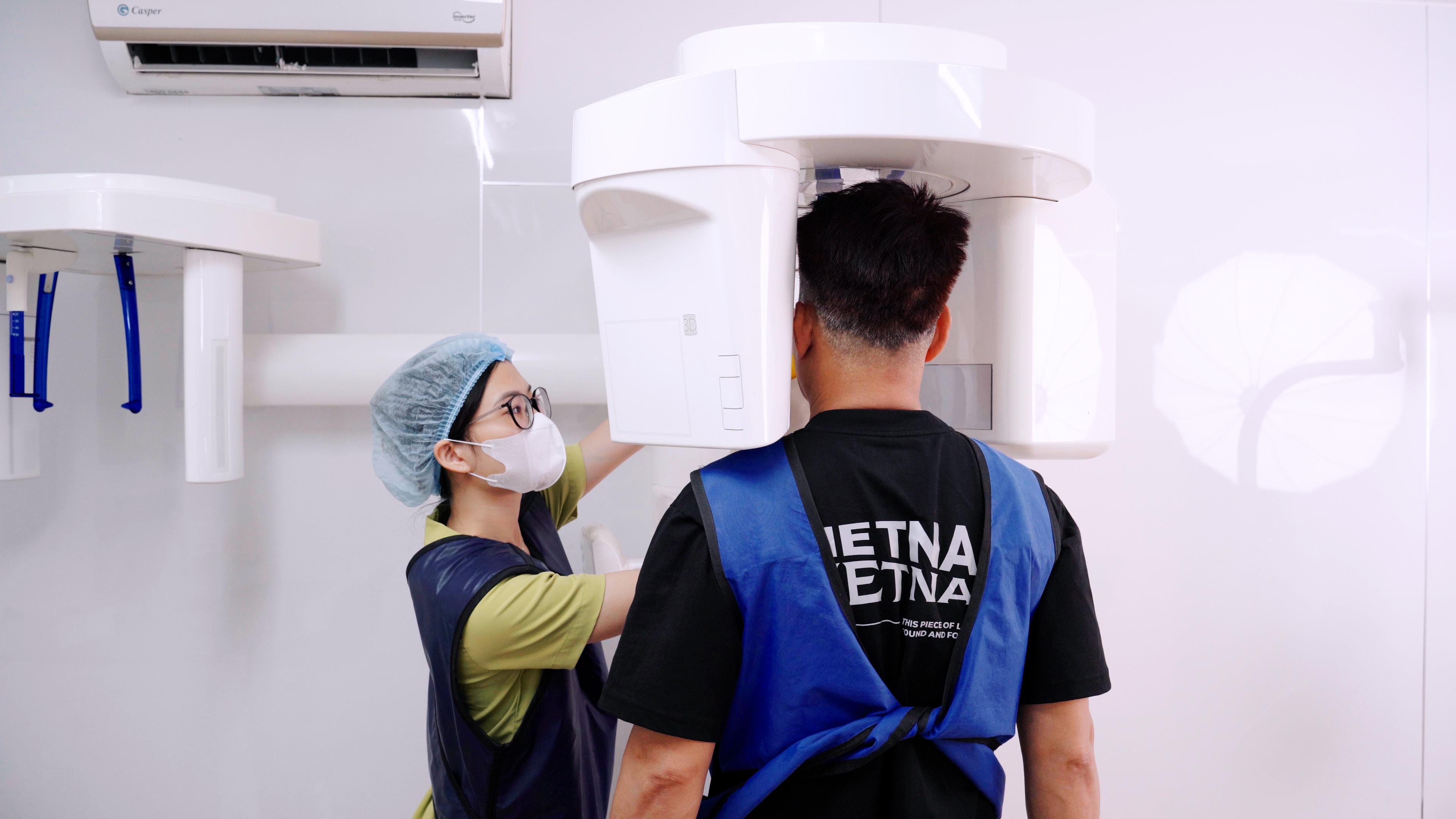
Invisalign has become one of the most popular treatments for dental tourists visiting Hanoi — and for good reason. The economics are compelling, the clinics are internationally certified, and uniquely among major dental procedures, you do not need to stay in Vietnam for the whole course of treatment. This guide walks you through every step of the process so you know exactly what to expect.
Why Dental Tourists Choose Invisalign in Hanoi
The headline number is straightforward: Invisalign in Hanoi costs $1,500–$4,000 depending on case complexity, compared with $6,000–$12,000 in Australia or the UK. That gap is large enough to cover return flights, accommodation, and a week of sightseeing and still leave thousands in your pocket.
Beyond price, Hanoi has a growing number of Invisalign-certified clinics, including practices with English-speaking orthodontists, iTero digital scanners, and direct access to Align Technology’s global lab network — the same technology used everywhere in the world.
For a broader look at what dental treatment in Hanoi costs across procedures, see our Hanoi dental prices 2026 guide.
How Invisalign Works: The 8 Steps
Step 1: Consultation and iTero 3D Scan
Time required: 30–60 minutes
Your first appointment is a consultation and a digital scan of your teeth using an iTero intraoral scanner. There are no messy physical impressions — a wand is passed over your teeth and a precise 3D model is generated in minutes. The dentist assesses whether your case is suitable for Invisalign or whether traditional braces would be more appropriate.
Step 2: ClinCheck Treatment Simulation
Time required: 1–2 weeks to generate
Your 3D scan is sent to Align Technology, which produces a ClinCheck simulation — a digital animation showing exactly how your teeth will move from their current position to the final result. You see your projected smile before committing to treatment. This is one of Invisalign’s strongest selling points and gives you the opportunity to discuss adjustments with your orthodontist before any trays are made.
Step 3: Aligner Manufacture
Time required: 3–4 weeks
Once you approve the ClinCheck plan, Align Technology manufactures your full set of custom clear aligner trays. Each tray is trimmed to your gum line and made from Align’s SmartTrack material. The complete set is shipped directly to your Hanoi clinic. For dental tourists, this is the waiting period — either plan to spend time in Hanoi sightseeing, or fly home and return when the trays are ready.
Step 4: First Aligner Fitting
Time required: 10–15 minutes
The fitting appointment is brief. Your dentist seats the first tray and checks the fit. Many patients also receive small tooth-coloured composite attachments bonded to specific teeth — these act as handles that allow aligners to grip and rotate or tip teeth with more precision. Attachments are invisible at conversational distance and are removed at the end of treatment.
Step 5: Wearing Your Aligners
Ongoing — at home
This is where the dental tourist advantage kicks in. You wear each tray for 22 hours per day and advance to the next tray every 1–2 weeks, following your orthodontist’s schedule. Because you have collected every tray in the set at your fitting appointment, you progress entirely at home. Remove aligners only to eat, drink anything other than water, and brush your teeth.
Step 6: Progress Check Appointments
Every 6–8 weeks
Traditionally these are in-person visits, but many Hanoi clinics now offer remote check-ins via app photos for international patients — ask specifically when booking. If you are planning a return trip to Vietnam anyway, combining a progress check with a holiday is easy to arrange. See our guide on how to combine a holiday with dental treatment in Hanoi.
Step 7: Refinements If Needed
Common — included in most plans at no extra cost
Refinements are additional aligner trays ordered after your main set is complete to address any teeth that have not moved as planned. They are extremely common and are included in comprehensive Invisalign plans at no additional charge. Your orthodontist will take a new scan and order the refinement trays through the same process.
Step 8: Retainer Phase
Ongoing after treatment
Once treatment is complete, you wear retainers every night to prevent teeth from drifting back. Retainers are usually clear and similar in appearance to aligners. This phase lasts indefinitely — teeth will relapse without them.
Invisalign Cost in Hanoi vs Home Countries
| Plan Type | Hanoi | Australia | United Kingdom |
|---|---|---|---|
| Invisalign Lite | $1,500–$2,500 | $4,500–$7,000 | £3,500–£5,500 |
| Invisalign Comprehensive | $2,500–$4,000 | $8,000–$12,000 | £6,000–£10,000 |
| Retainers (post-treatment) | $100–$200 | $400–$800 | £300–£600 |
For comparison with other orthodontic options, see our Invisalign vs braces in Hanoi breakdown.
Is Your Case Suitable for Invisalign?
Invisalign treats most mild to moderate alignment issues effectively. Here is a quick reference:
| Case Type | Invisalign? | Notes |
|---|---|---|
| Mild to moderate crowding | Yes | Most common use case |
| Gaps between teeth | Yes | Works well |
| Slight overbite / underbite | Yes | With attachments or elastics |
| Severe crowding | No | Traditional braces recommended |
| Significant skeletal bite correction | No | May require surgery + braces |
Your ClinCheck simulation will confirm suitability definitively before you commit to any payment.
Recommended Hanoi Clinics for Invisalign
Several clinics in Hanoi hold Invisalign certification and have experience treating international patients:
- Picasso Dental Clinic Old Quarter — English-speaking orthodontists, iTero scanner, central location
- Minh Thu Dental — experienced with foreign patients, flexible scheduling
- Australian Dental Clinic — Australian-standard protocols, familiar environment for Antipodean patients
- Greenfield Dental — modern equipment, English-language consultation
See our top 6 dental clinics in Hanoi for a full comparison.
Related Reading
- Hanoi dental prices 2026: the complete guide
- How to combine a holiday with dental treatment in Hanoi
- How many days do you need in Hanoi for dental work?
- Dental veneers in Hanoi: how long does treatment take?
- Top 6 dental clinics in Hanoi for international patients
Sources
- Align Technology — ClinCheck and iTero Clinical Documentation (aligntech.com, 2025)
- International Association of Dental Research — Clear Aligner Efficacy Review, Journal of Dental Research, 2024
- Australian Dental Association — Schedule of Fees 2025 (ada.org.au)