Hoi An has become increasingly promoted as a dental tourism destination, particularly to New Zealand and Australian patients. The appeal is obvious: a UNESCO World Heritage town with beaches nearby sounds like an ideal recovery setting. But for most dental procedures — particularly implants, All-on-4, or any complex restorative case — Hanoi is the significantly stronger choice. Here is the honest comparison.
Clinic Quality and Quantity
The most important factor in any dental tourism decision is not the scenery. It is whether the clinic you are trusting with your jaw has the equipment, the brands, the imaging, and the track record to deliver a durable result.
On every one of those measures, Hanoi leads by a substantial margin.
| Factor | Hanoi | Hoi An |
|---|---|---|
| Verified international clinics | 6 | 2–3 |
| ISO-certified clinics | 2 (Picasso ISO 9001, Westcoast) | 0 confirmed |
| Nobel Biocare / Straumann implants | 4 clinics confirmed | 1 (unconfirmed) |
| In-house CBCT imaging | All 6 clinics | 1–2 clinics |
| CAD/CAM in-house | 3 clinics | 0 confirmed |
| International patient track record | 15–25+ years at top clinics | 5–10 years |
| Google review volume (top clinic) | 208–292 reviews | 50–120 reviews |
Hanoi’s six verified international-standard clinics include Picasso Dental Old Quarter, Australian Dental Clinic, Westcoast International Dental, Greenfield Dental, and Minh Thu Dental. These clinics have treated thousands of international patients between them, with documented case histories, multilingual coordinators, and full digital workflows including CBCT scanning and CAD/CAM milling in many cases.
Hoi An’s clinic market, by contrast, developed later and remains smaller. The clinics that do operate in Hoi An can handle straightforward procedures competently, but the concentration of expertise, equipment, and verified implant brand availability simply does not match Hanoi’s.
Why CBCT Availability Matters
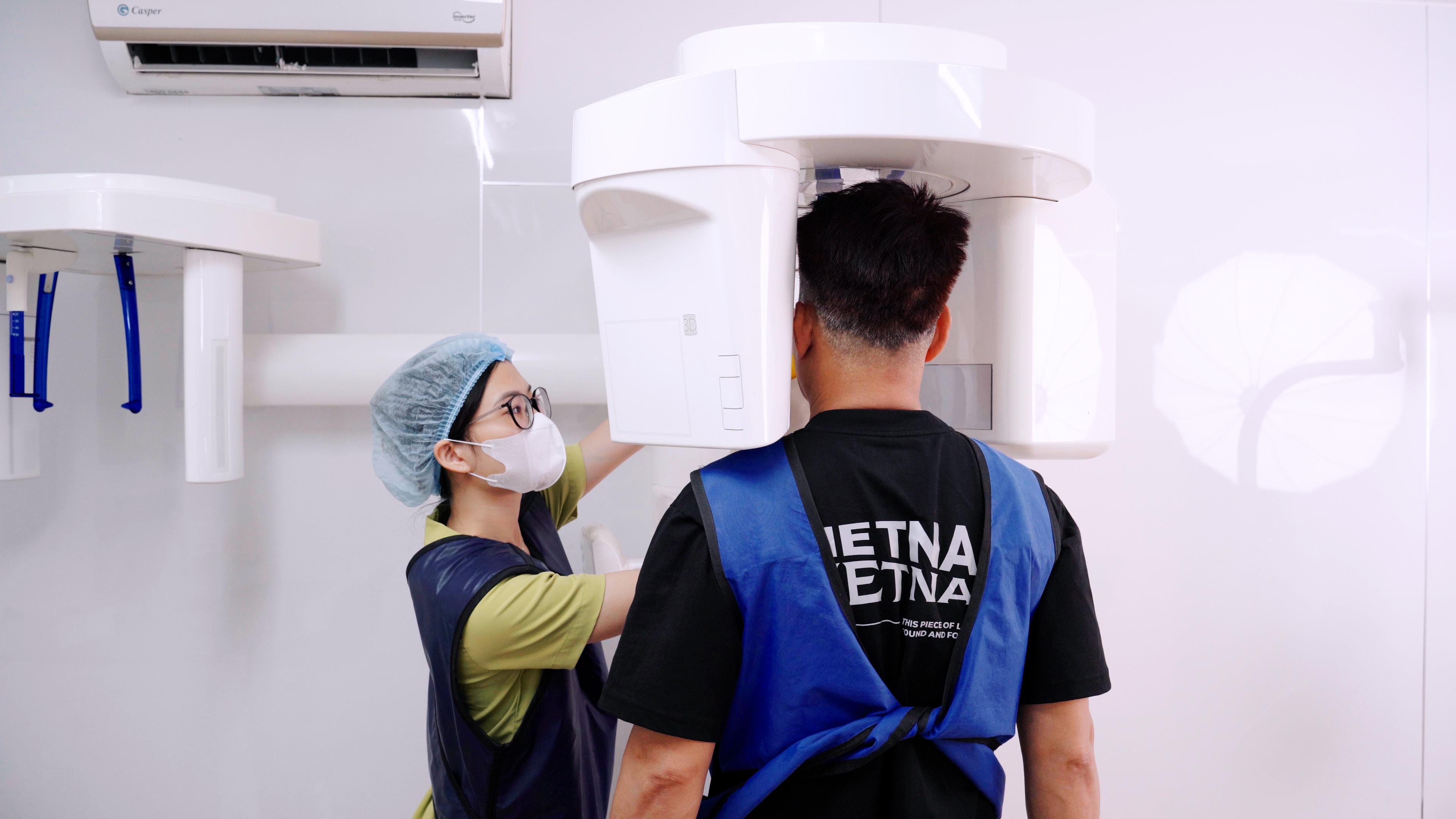
For implants in particular, CBCT (cone beam computed tomography) imaging is not optional — it is the standard of care. CBCT gives your surgeon a three-dimensional map of your bone density, sinus anatomy, and nerve positions before a single incision is made. All six of Hanoi’s top clinics have in-house CBCT. In Hoi An, only one or two clinics can confirm this, and some patients have reported being sent to a separate facility for imaging, adding time and coordination complexity to the treatment sequence.
Implant Brand Transparency
When a clinic quotes you for a dental implant, the brand of the implant post matters significantly for long-term survival rates and for what happens if you ever need a component replaced in your home country. In Hanoi, four clinics can confirm in writing that they stock Straumann, Nobel Biocare, or both. In Hoi An, this documentation is harder to obtain and in at least one case has not been independently verified.
Flight Connections
Getting to your dental destination without exhaustion is a genuine clinical consideration, particularly for multi-day treatment plans. Arriving fatigued and jet-lagged before a surgical procedure is not ideal.
Hanoi (Noi Bai International — HAN):
- Direct flights from Singapore, Bangkok, Seoul, Tokyo, London, Sydney, Dubai, Frankfurt, and Kuala Lumpur
- Multiple daily connections from most Asian hubs
- Cathay Pacific, Singapore Airlines, Vietnam Airlines, and Qatar Airways all serve HAN
- Flying time from Sydney: approximately 9.5 hours direct
Hoi An (nearest airport: Da Nang — DAD):
- Da Nang has no long-haul international connections; almost all international passengers connect through Hanoi (HAN) or Ho Chi Minh City (SGN)
- A typical journey from Australia or New Zealand therefore involves: international flight to HAN or SGN, domestic connection to DAD, then a 30-minute transfer to Hoi An
- This adds 3–6 hours and an additional transit to most international journeys
- Vietnam Airlines and Bamboo Airways operate the Hanoi–Da Nang and HCMC–Da Nang routes multiple times daily
For most dental tourists flying from Australia, New Zealand, the United Kingdom, Europe, or North America, Hanoi is substantially easier and faster to reach. This matters not just for the first arrival but for the return flight immediately after treatment, when swelling, discomfort, and post-surgical fatigue are realistic factors.
Recovery Experience
The days following implant placement or a complex restorative procedure are not the time to be searching for soft food options in a rural guesthouse or navigating back roads to reach your clinic for a review appointment.
Hanoi:
- The Old Quarter and Hoan Kiem district provide immediate access to dozens of hotels at every price point, from budget guesthouses to five-star properties
- Pharmacies are every few streets and stock international pain management and antiseptic brands
- Vietnamese soft-food cuisine is among the best in the world for post-surgical recovery: pho (bone broth noodle soup), banh cuon (steamed rice rolls), and chao (rice porridge) are calorie-dense, protein-rich, and gentle on healing tissue
- Grab (Southeast Asia’s equivalent of Uber) operates widely, so clinic transport is reliable and air-conditioned — no need to navigate traffic or find a taxi
- Major hospitals including Bach Mai Hospital and Viet Duc Hospital are nearby for any emergency, and dental clinics can refer directly
- Hoan Kiem Lake park is a 10-minute walk from most Old Quarter hotels, providing a calm, flat environment for gentle post-procedure exercise
Hoi An:
- A beautiful, walkable historic town, but smaller in scale and with fewer accommodation options across the price spectrum
- Some popular resort accommodation (villa-style properties outside the old town) can be 10–30 minutes from the clinic by motorbike taxi — not ideal post-procedure
- Beach access at An Bang and Cua Dai is visually appealing but sand, salt water, and sun exposure are actively contraindicated in the first weeks after implant surgery
- No major hospital — serious emergencies require transfer to Da Nang, approximately 30 kilometres away
- Fewer pharmacies and fewer international brand medications readily available compared to Hanoi
This is not a dismissal of Hoi An as a destination. For a holiday, it is genuinely exceptional. As a recovery environment for complex dental work, it carries real logistical limitations that Hanoi does not.
Procedure-Specific Guidance
Dental Implants
For single dental implants, the recommendation is unambiguous: Hanoi. The combination of verified implant brands, CBCT imaging, experienced surgeons with international patient track records, and superior recovery infrastructure makes the choice clear. All six Hanoi clinics can handle single implant cases. The same cannot be said with equivalent confidence for Hoi An.
All-on-4 and Full-Arch Restoration
All-on-4 cases require a high level of surgical planning, digital workflow integration, and often multiple appointments across 5–10 days or longer for the provisional fitting phase. The surgical complexity, the need for CBCT, and the value of having CAD/CAM in-house all point to Hanoi. No confirmed All-on-4 case series has been independently published from Hoi An clinics at the time of writing.
Veneers and Cosmetic Work
This is where Hoi An becomes a more defensible option. Porcelain veneers and composite veneers do not require CBCT, do not involve surgical placement into bone, and typically require fewer appointments than implant work. A patient who wants 4–8 porcelain veneers and is already planning time in central Vietnam could reasonably consider Hoi An’s better-reviewed clinics — but should still independently verify the laboratory they use, the porcelain brand, and the dentist’s cosmetic case portfolio before committing.
For veneers alone, Hanoi remains a stronger option in terms of clinic choice and case volume, but Hoi An is not excluded the way it is for implant work.
Teeth Whitening and Basic Care
Professional cleaning, scale and polish, and in-chair whitening are the lowest-risk procedures on this list. For these, Hoi An clinics are entirely adequate. Patients travelling through central Vietnam who want to squeeze in a clean and polish can do so with reasonable confidence at the town’s better-reviewed clinics.
When Hoi An Makes Sense
To be fair about this comparison: Hoi An is a genuine option for patients who:
- Want simple procedures — cleaning, whitening, 1–2 composite veneers, basic fillings — and are not pursuing anything surgical
- Are already travelling to central Vietnam for tourism and want to add a straightforward dental appointment without a separate trip
- Are comfortable with fewer clinic options and a less extensive evidence base for those clinics
- Prioritise the UNESCO atmosphere, the beaches, and the slower pace of a smaller town over maximum clinic quality
The mistake to avoid is treating Hoi An as a cost-cutting alternative to Hanoi for implants or complex work. The cost difference, if any, is unlikely to reflect a genuine like-for-like saving — it more often reflects a different (lower-tier) implant brand, older equipment, or a less experienced surgeon.
Recommended Approach: Do Both
The most common itinerary among experienced dental tourists who want to see central Vietnam is not to choose — it is to sequence. Complete your treatment in Hanoi with one of the verified clinics, then travel south to Da Nang and Hoi An during the osseointegration waiting period (typically 3–6 months after implant placement, if you are returning for the crown phase).
If you are visiting Hanoi for implant placement, there is often a 5–10 day window after the surgical appointment while initial healing takes place before your review. This is an ideal time to take the 75-minute Vietnam Airlines flight from Noi Bai to Da Nang and spend a few days walking the Hoi An old town, trying the local food, and doing the beach day you wanted — before returning to Hanoi for your pre-departure check and flying home.
This itinerary gives you the clinical confidence of Hanoi’s infrastructure and the tourism experience of Hoi An without compromising either.
The Bottom Line
Hoi An is a destination worth visiting. It should not, for most international patients, be the city where you have your implants placed or your full-arch restoration completed. The clinic numbers, implant brand documentation, imaging infrastructure, flight accessibility, and recovery environment all favour Hanoi by a meaningful margin.
If you are in any doubt, use this simple rule: the more complex or irreversible the procedure, the more strongly you should choose Hanoi. For anything involving surgical placement, bone, or multi-appointment sequencing, Hanoi’s six verified clinics — Picasso, Australian Dental, Westcoast, Greenfield, Minh Thu, and others — represent the strongest available option in Vietnam.
Related Reading
- Top 6 Dental Clinics in Hanoi
- Hanoi vs Ho Chi Minh City vs Da Nang — Dental Comparison
- Dental Implants in Hanoi — What to Expect
- All-on-4 in Hanoi — Full-Arch Restoration Guide
- Hanoi Dental Prices 2026
- New Zealand Guide to Dental Work in Hanoi
Sources
- Vietnam National Administration of Tourism, Regional dental clinic registrations, 2025
- Da Nang Department of Health, Dental facility registry, 2025
- Google Maps verified review data, top clinics in Hanoi and Hoi An, June 2026
- Vietnam Airlines and Bamboo Airways route schedules, June 2026