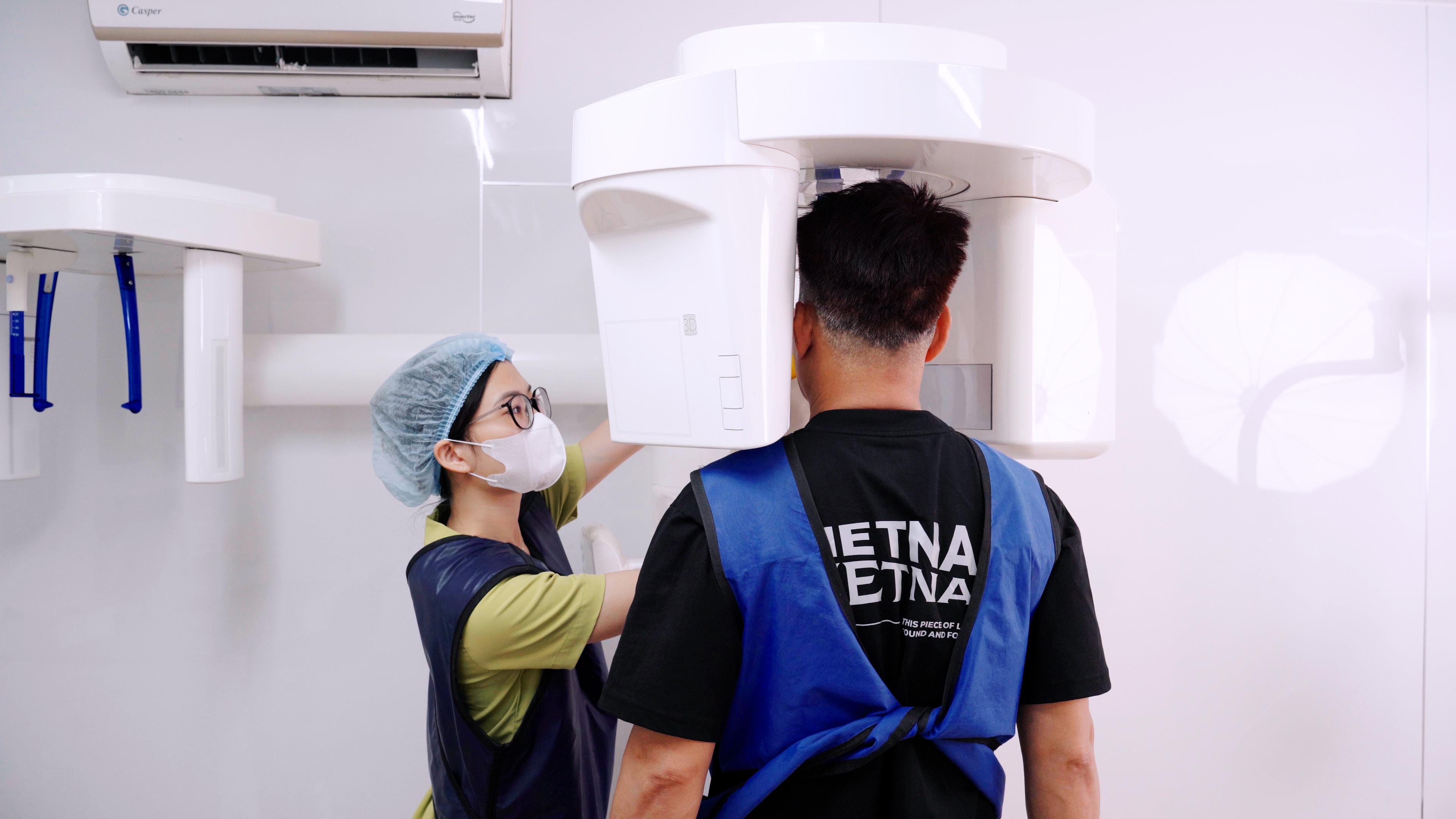
One of the most common concerns among prospective dental tourists is a straightforward one: what happens if something goes wrong? It is a legitimate question, and the honest answer has two parts. First, serious complications at reputable, licensed Hanoi clinics are uncommon. Second, knowing the regulatory framework, verifying credentials upfront, and understanding your options before you travel means you are never starting from zero if a problem does arise.
This guide covers the Vietnamese healthcare regulatory framework as it applies to dental patients, how to verify a clinic before you commit, what warranties you should expect in writing, and the practical steps to take if treatment does not go as planned.
Vietnam’s Dental Regulatory Framework
Dental practices in Vietnam are licensed and regulated by the Ministry of Health (Bộ Y tế) and its provincial Health Departments (Sở Y tế). The regulatory structure is more robust than many international patients expect, and it applies equally to local and foreign-owned clinics operating on Vietnamese soil.
Every legitimately operating dental clinic must hold three core credentials:
- Medical facility operating licence — issued by the provincial Health Department (in Hanoi, the Sở Y tế Hà Nội). This licence specifies the permitted scope of services, the physical premises approved for clinical work, and the responsible practitioner named on the licence.
- Practising certificate for each treating dentist — issued after completing an accredited degree programme at a recognised Vietnamese or internationally recognised dental school, passing the national professional examination, and completing the required supervised clinical hours.
- Medical waste management registration — confirming the clinic has approved protocols for safe disposal of clinical waste, sterilisation documentation, and infection control procedures meeting Ministry of Health standards.
Clinics operating without a valid licence, or with dentists practising without a current certificate, are in breach of Vietnamese health law and are not covered by the professional indemnity framework that underpins legitimate complaints processes. This is why credential verification before you travel is not bureaucratic box-ticking — it is the single most important step in protecting yourself.
You can verify a Hanoi clinic’s operating licence by asking to see the document directly. The licence number, issuing authority, and expiry date will be printed on it. Reputable international-standard clinics display the licence in their reception area and will send a scan on request without hesitation. Any clinic that deflects this request is a clinic to avoid.
How to Verify a Clinic Before You Travel
Prevention is far more effective than any remedy. The time invested in verification before booking is the most valuable patient-protection activity you can undertake. Here is a practical framework.
Independent research
- Google Maps reviews: Look for volume and written content, not just aggregate star ratings. A clinic with 400 reviews and detailed written accounts from international patients carries more evidentiary weight than one with a 5.0 average from 12 reviews.
- Specialist platforms: SmileJet.app lists Hanoi clinics with treatment documentation, before-and-after case records, and verified international patient reviews.
- Medical tourism forums: Dental Fear Central and WhichDentist both have active threads from international patients who have used Hanoi clinics. Search the clinic name and read critically.
Direct clinic verification
Send a pre-booking email and ask:
- The operating licence number and which provincial Health Department issued it
- The treating dentist’s practising certificate number
- Which implant brands the clinic stocks, with documentation (for implant cases — see dental implants)
- A written treatment plan and itemised cost breakdown before you agree to anything
- The warranty terms in writing — what is covered, for how long, and what voids the warranty
How a clinic responds to these questions tells you as much as the answers themselves. A clinic with a professional, prompt, documented response to a pre-booking credentials request is operating at a different standard from one that answers vaguely or not at all.
During your visit
- Request to see implant packaging and the accompanying certificate of authenticity before any surgery. This confirms the brand being placed matches what was quoted and that it is not a counterfeit or grey-market component.
- Keep copies of all receipts, the signed treatment plan, and any consent forms.
- Photograph your X-rays on your phone before you leave. Clinics will sometimes email DICOM files on request — ask for this.
- If you are undertaking multi-stage treatment across multiple visits, document each appointment with notes on what was done and by whom.
What Warranties Should Reputable Clinics Provide?
International-standard clinics in Hanoi routinely provide written warranties as a standard part of the patient package. The table below reflects typical warranty terms from established clinics with documented international patient programmes.
| Treatment | Warranty Period | Typical Coverage | Common Exclusions |
|---|---|---|---|
| Dental implants (fixture) | 5–10 years | Osseointegration failure, manufacturer fixture defect | Failure due to smoking, uncontrolled diabetes, trauma |
| Implant crown | 2–5 years | De-bonding, cracking under normal use | Grinding, accidental breakage, poor home care |
| Dental crowns (on natural teeth) | 2–5 years | De-bonding, cracking under normal use | Trauma, grinding without nightguard |
| Veneers | 2–5 years | De-bonding, cracking under normal use | Biting hard objects, grinding, trauma |
| All-on-4 prosthesis | 1–3 years | Prosthesis fitting adjustments, breakage under normal use | Accidental damage, failure to attend review appointments |
| Invisalign aligners | Per treatment plan | Refinements included within the treatment plan period | Lost aligners, failure to wear as directed |
Two things to note about the table above. First, the figures reflect reputable international-standard clinics — budget clinics or unlicensed operators may offer verbal warranties that are unenforceable in practice. Second, warranty coverage at a clinic in Hanoi does not automatically translate to free remedial treatment at your dentist at home. The warranty typically covers retreatment at the original clinic. Factor this into your planning if you are unlikely to return to Hanoi within the warranty period.
The non-negotiable rule: get warranty terms in writing before treatment begins. A warranty that cannot be provided in English, in writing, before you commit is not a warranty you can rely on.
If Something Goes Wrong: Step-by-Step
The following framework applies to any post-treatment issue, from the routine to the serious.
Step 1: Contact the clinic immediately
The majority of post-procedure concerns — swelling beyond the expected window, a loose crown, sensitivity, a question about healing — are routine clinical issues that the treating clinic can address directly. Contact them via WhatsApp or email with photographs and a clear description. Reputable clinics with international patient programmes respond within 24 hours and will guide you through home management or arrange a telemedicine video call with the treating dentist.
Do not skip this step even if you are already home. The clinic’s response at this stage — speed, professionalism, willingness to engage — tells you whether a formal escalation is necessary.
Step 2: See your regular dentist at home
For any issue requiring physical clinical intervention after you have returned home, see your regular dentist. Share all documentation from Hanoi: X-rays, treatment plan, implant certificate (if applicable), and receipts. Your dentist can assess the situation, determine whether the Hanoi treatment is the cause of the problem, and provide any necessary treatment. Keep all receipts for any remedial work — these will be relevant if you pursue a warranty claim or insurance claim.
Step 3: Formal complaint (if warranted)
If Step 1 and Step 2 establish that the Hanoi clinic is responsible for a clinical failure and the clinic is not engaging constructively:
- Formal written communication to clinic management: Document the issue clearly — dates, photographs, X-rays, receipts, and a description of the clinical failure. Request a written response within a specified timeframe (14 days is reasonable).
- Contact the Hanoi Department of Health (Sở Y tế Hà Nội): The Department has jurisdiction over licensed dental facilities operating in Hanoi. They can investigate complaints, inspect facilities, and take action against licences where violations are established. Contact details are published on the Department’s official website.
- Contact your travel insurer: If the issue constitutes a medical emergency or required emergency treatment abroad, your travel insurance policy may cover costs. Review your policy terms for medical treatment coverage.
- Escalate via your booking platform: If you booked through SmileJet or another medical tourism platform, escalate through their dispute resolution process. Reputable platforms take clinic accountability seriously because their own credibility depends on it.
Step 4: Legal recourse
Formal legal action against a Vietnamese dental clinic from an overseas jurisdiction is practically difficult and rarely cost-effective relative to the amounts typically involved in dental disputes. Vietnamese civil law does provide patient rights in medical treatment contexts, and the Vietnam Civil Code (amended 2023) includes provisions relevant to medical service liability. However, pursuing these from abroad requires Vietnamese legal representation, the ability to appear or be represented in Vietnamese proceedings, and time frames that are rarely compatible with the practical needs of a patient seeking resolution.
The realistic legal-adjacent recourse for international patients is:
- Clinic-level dispute resolution — which most reputable clinics engage with seriously because their international reputation depends on it
- Insurance claims for emergency remedial treatment at home
- Formal complaints to the provincial Health Department for licensing violations, which can result in regulatory action even if they do not directly compensate the patient
Red Flags: Clinics to Avoid
Understanding what a legitimate clinic looks like makes the warning signs of an illegitimate one easier to identify. Avoid any clinic that:
- Cannot or will not provide an operating licence number on request
- Quotes substantially below the established market rate for Hanoi (implants under $500 USD, All-on-4 under $2,000 USD) without a credible explanation
- Refuses to provide a written treatment plan and itemised quote before you agree to treatment
- Cannot tell you the brand of implant being placed, or declines to show you the packaging
- Has no English-language patient documentation or cannot provide a warranty in writing
- Has reviews that are suspiciously uniform, short, or concentrated in a short time window — a common pattern with review manipulation
The Best Protection: Choosing the Right Clinic
The most effective patient protection strategy is thorough clinic selection before you travel. By the time a complication arises, the quality of the clinic you chose has already determined most of the outcome.
All six clinics featured on this guide — Picasso Dental Old Quarter, Picasso Dental Westlake, Australian Dental Clinic, Westcoast International Dental, Greenfield Dental, and Minh Thu Dental — are licensed by the Hanoi Department of Health, have documented international patient track records across multiple years, stock internationally recognised implant brands, and provide written treatment warranties. They are not the cheapest options in Hanoi. They are not supposed to be.
The cases that end in complaints or disputes almost always share one or more of the following: the patient chose on price alone, ignored credential red flags during the selection process, or did not get a written treatment plan before agreeing to work. The cases that go well — which is the overwhelming majority at reputable clinics — begin with the same due diligence described in this guide.
Dental tourism to Hanoi is a sound decision for a large and growing number of international patients. The savings are real, the clinical standards at established clinics are genuine, and the patient experience is consistently positive when the right groundwork is done. The framework in this guide gives you the tools to be on the right side of that outcome.
Related Reading
- Is Dental Work in Vietnam Safe?
- How to Choose a Dental Clinic in Hanoi: A Checklist
- Top 6 Dental Clinics in Hanoi for International Patients
- Dental Implants in Hanoi: Brands, Costs, and What to Expect
- All-on-4 Dental Implants in Hanoi
- Health Insurance for Dental Tourists in Vietnam
- First-Timer’s Guide to Dental Tourism in Hanoi
Sources
- Vietnam Ministry of Health, Medical facility licensing requirements and operating standards, 2025
- Hanoi Department of Health (Sở Y tế Hà Nội), Licensed dental facility registry and complaint procedures, 2025
- Vietnam Civil Code (Bộ luật Dân sự), Patient rights provisions in medical treatment contracts, 2015 (amended 2023)
- International Society of Travel Medicine, Medical tourism patient safety guidelines and pre-travel verification frameworks, 2024