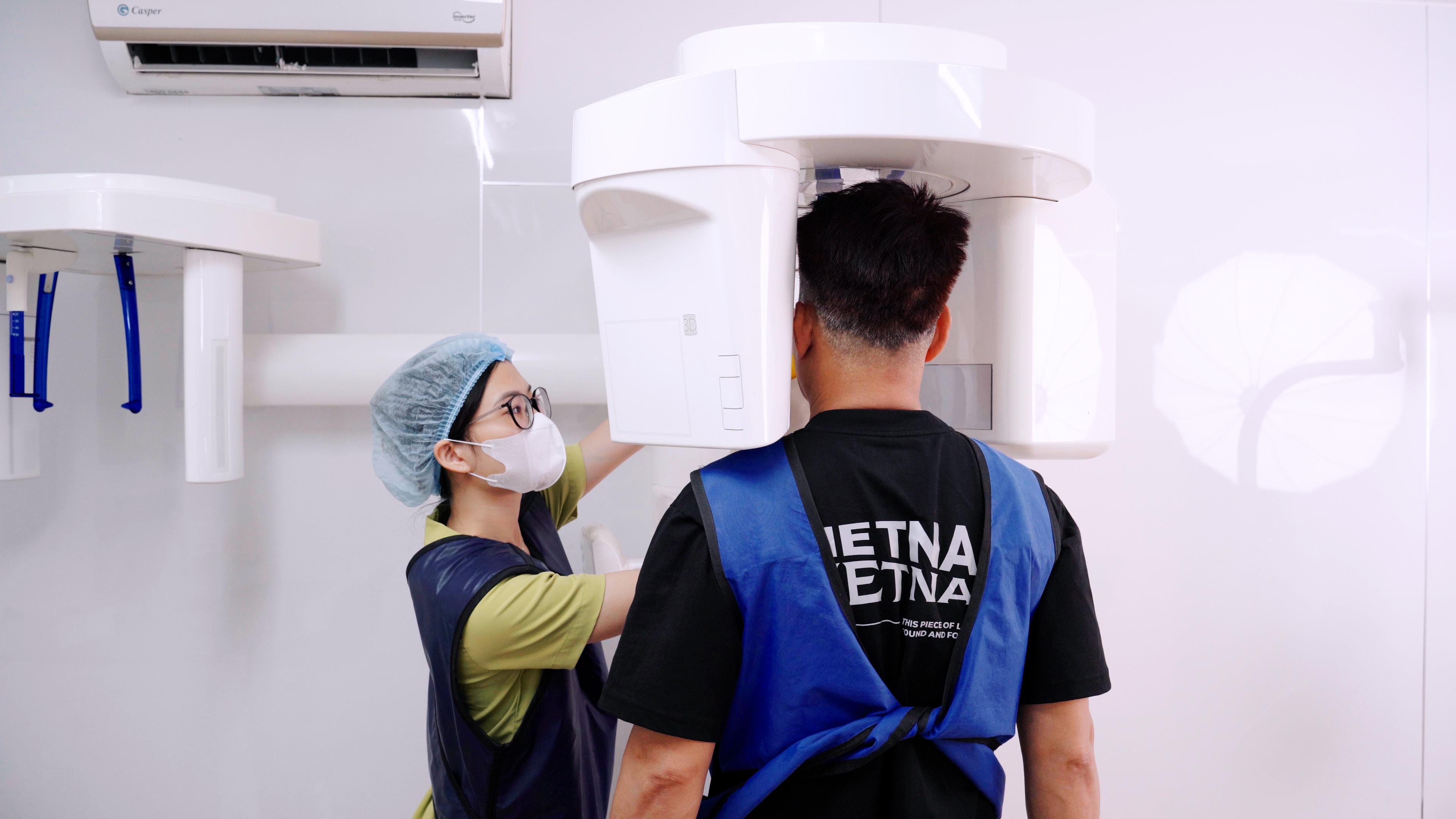
Hanoi has quietly become one of Asia’s top destinations for dental tourism — and once you see the numbers, it is easy to understand why. Patients from Australia, the UK, the US, and Canada are saving tens of thousands of dollars on implants, veneers, and full-arch restorations while spending time in one of Southeast Asia’s most captivating cities. This guide covers everything you need to plan a safe, cost-effective dental trip to Hanoi in 2026.
Why Hanoi for Dental Tourism?
The case for Hanoi dental tourism rests on four pillars: dramatic cost savings, genuinely high-quality care, easy visa access, and a destination worth visiting for its own sake.
Cost savings of 70–90% are the headline figure. A single dental implant that costs $5,000 in Sydney or $4,500 in London can be completed in Hanoi for $500–$1,500 — the same branded components, the same CBCT-guided placement, a fraction of the price. The savings compound quickly: a full-mouth All-on-4 restoration that runs $60,000–$80,000 in the US costs $8,000–$17,000 in Hanoi for both arches.
Clinical quality is genuinely competitive. The top Hanoi clinics are ISO-certified, invest in CBCT scanners and CAD/CAM milling units, use Straumann, Nobel Biocare, and Osstem implant systems, and employ dentists trained in Australia, the US, South Korea, and Europe. Vietnam’s dental sector has modernised rapidly over the past decade, partly driven by medical tourism demand.
Visa-free entry for 45 days covers most Western nationalities. Vietnam extended its unilateral visa exemption programme significantly in 2023, and citizens of Australia, the UK, France, Germany, Spain, Italy, Canada, the US, South Korea, and Japan can all arrive without a visa for up to 45 days. That is more than enough time for a single-implant placement or a veneer set. See our Hanoi visa guide for the current country list and e-visa instructions.
Hanoi is a destination, not just a layover. The Old Quarter, Hoan Kiem Lake, the Temple of Literature, Hoa Lo Prison, and dozens of world-class restaurants make the city genuinely exciting between appointments. Day trips to Ha Long Bay and Ninh Binh are straightforward from the city. Read best things to do in Hanoi and our 3-day Hanoi itinerary for ideas.
For a broader comparison of dental tourism destinations, see Vietnam vs Turkey, Vietnam vs Mexico, and Vietnam vs Hungary.
How Much Can You Save?
The table below shows typical prices for the most common procedures. Hanoi prices reflect the range across quality-accredited clinics. Western prices are mid-market estimates for 2026.
| Procedure | Hanoi | Australia | United Kingdom | United States | Canada |
|---|---|---|---|---|---|
| Single dental implant (incl. crown) | $500–$1,500 | $4,000–$6,500 | £2,500–£4,500 | $3,500–$6,000 | CA$4,000–$6,500 |
| All-on-4 per arch | $4,000–$8,500 | $20,000–$35,000 | £12,000–£25,000 | $20,000–$40,000 | CA$22,000–$38,000 |
| Porcelain veneer (E.max, per tooth) | $150–$400 | $1,500–$2,500 | £600–£1,200 | $1,000–$2,500 | CA$1,200–$2,500 |
| Porcelain crown | $120–$280 | $1,500–$2,200 | £700–£1,200 | $1,200–$2,000 | CA$1,200–$2,000 |
| Root canal (molar) | $80–$180 | $900–$1,800 | £500–£1,000 | $800–$1,800 | CA$900–$1,600 |
| Invisalign (full course) | $1,500–$4,000 | $8,000–$12,000 | £4,000–£7,000 | $5,000–$9,000 | CA$6,000–$10,000 |
| Full dentures (per arch) | $300–$600 | $2,000–$4,000 | £1,000–£2,500 | $1,500–$3,500 | CA$2,000–$4,000 |
| Teeth whitening (in-chair) | $80–$200 | $800–$1,500 | £400–£800 | $500–$1,500 | CA$600–$1,200 |
For a deeper price breakdown with clinic-by-clinic data, see Hanoi dental prices 2026. To model your specific savings, see dental implant savings in Vietnam.
Is It Safe?
Safety is the number-one concern for first-time dental tourists, and it is a legitimate question. The short answer: yes, high-quality dental care in Hanoi is safe — with the right clinic.
The Regulatory Environment
All dental clinics in Vietnam operate under licences issued by the Ministry of Health. Dentists must hold recognised qualifications and register with provincial health authorities. While the regulatory framework is less standardised than in Australia or the UK, the top Hanoi clinics have sought ISO 9001 and ISO 14001 certification independently, and several comply with JCI-aligned infection control protocols.
What to Look For in a Clinic
- ISO certification — confirms systematic quality management
- CBCT / 3D cone beam scanner — essential for safe implant planning
- Named implant brands — Straumann, Nobel Biocare, Osstem, or Zimmer Biomet; avoid clinics that will not confirm the brand
- Internationally trained dentists — qualifications from Australia, the US, South Korea, or Europe
- Transparent written treatment plans with itemised pricing before you commit
- Warranty on implants and ceramic work — reputable clinics offer 5–10 year warranties
For a detailed assessment of safety standards, read is dental work in Vietnam safe?
The Best Dental Clinics in Hanoi
Hanoi has dozens of dental clinics, but a handful consistently stand out for international patients. Here is a brief overview — see top 6 dental clinics in Hanoi for the full comparison.
- Australian Dental Clinic — Australian-standard protocols, English-speaking staff, multiple branches across Hanoi. A top choice for patients from Australia and expats.
- Picasso Dental Clinic — Old Quarter — centrally located, strong in cosmetic dentistry and implants, Korean-trained specialists.
- Picasso Dental Clinic — Westlake — the flagship Picasso location in the upscale Tay Ho district, with a full surgical suite and CAD/CAM lab.
- Greenfield Dental — known for All-on-4 and complex implant cases; uses Straumann and Nobel Biocare systems.
- Westcoast International Dental — internationally accredited, multilingual team, popular with North American patients.
- Minh Thu Dental — well-established general and cosmetic practice, competitive pricing, strong track record with veneer cases.
All six clinics offer free online consultations and can review X-rays or CT scans sent from home before you book flights.
Most Popular Procedures for Dental Tourists
Dental Implants
The single most common reason patients travel to Hanoi. A single implant including the crown costs $500–$1,500 in Hanoi versus $4,000–$6,500 in Australia. Placement is guided by CBCT imaging, and most clinics use Straumann SLActive or Nobel Biocare implants for predictable osseointegration. Learn more at dental implants in Hanoi and how dental implants work step by step.
All-on-4 Full-Arch Restoration
All-on-4 is the procedure that generates the largest absolute savings. One arch in Hanoi: $4,000–$8,500. Both arches: $8,000–$17,000. The equivalent in the US or Australia runs $50,000–$80,000 for both arches. Most cases require two trips. See All-on-4 in Hanoi, how long to stay for All-on-4, and what happens during All-on-4 surgery.
Porcelain Veneers
A smile transformation with E.max porcelain veneers costs $150–$400 per tooth in Hanoi — a ten-tooth set runs $1,500–$4,000, versus $15,000–$25,000 in the US. Most veneer cases are completed in 5–7 days. See veneers in Hanoi and how long to stay for veneers.
Dental Crowns
Porcelain crowns cost $120–$280 each in Hanoi. Patients who need multiple crowns — common after root canal treatment — can save thousands versus home pricing. See dental crowns in Hanoi.
Root Canal Treatment
$80–$180 per canal in Hanoi, versus $800–$1,800 at home. Often combined with a crown at a significant saving. See root canal treatment in Hanoi.
Teeth Whitening and Invisalign
In-chair whitening starts at $80–$200 — a popular add-on for patients already in the chair. Invisalign full treatment runs $1,500–$4,000, roughly a third of Western pricing. See teeth whitening in Hanoi and Invisalign in Hanoi.
How to Plan Your Trip
When to Go
Hanoi has a subtropical climate with four distinct seasons. October to April is generally the best window: temperatures are mild (15–25°C), humidity is lower, and rainfall is minimal. Avoid late July and August if possible — peak humidity and occasional typhoon-season rain can make recovery less comfortable.
How Long to Stay
- Veneers or crowns: 5–7 days is usually sufficient for a full set.
- Single implant (placement): 7–10 days for the surgical visit, then return 3–6 months later for the crown.
- All-on-4: Plan two trips of approximately 5 days each, 3–6 months apart.
Read how many days to spend in Hanoi for general trip-length advice, and the dedicated guides linked above for procedure-specific timelines.
Combining Dental Treatment with Tourism
Most patients have 2–4 gap days between appointments — ideal for exploring Hanoi or taking day trips. Ha Long Bay is a 3.5-hour drive and can be done as an overnight trip between appointments. Ninh Binh is just 90 minutes away. See combining a holiday with dental treatment, the one-week Hanoi itinerary, and Ha Long Bay day trip from Hanoi.
Two-Trip Planning for All-on-4
The All-on-4 protocol requires osseointegration time between implant placement and final prosthesis fitting — typically 3–6 months. Most international patients fly out for the surgical phase, return home to heal, then come back for the final fitting. Plan both trips before you start: book your second flight at the same time as the first to secure the best fares.
Flights and Getting to Hanoi
Hanoi is served by Noi Bai International Airport (HAN), approximately 35 km north of the city centre.
- From Australia: Direct flights from Sydney with Bamboo Airways or Vietnam Airlines (approximately 9 hours); connections via Singapore, Bangkok, or Kuala Lumpur from Melbourne, Brisbane, and Perth. Budget: AUD $600–$1,200 return.
- From the UK: No direct service. One-stop connections via Dubai, Doha, Singapore, or Bangkok from London Heathrow. Flight time approximately 13–16 hours total. Budget: £500–£900 return.
- From Canada: Connections via Tokyo, Seoul, Hong Kong, or Taipei. Total travel time from Toronto or Vancouver is 20–26 hours. Budget: CAD $800–$1,400 return.
- From mainland Europe: One-stop connections via Middle Eastern hubs (Emirates, Qatar, Etihad) or Asian hubs (Singapore Airlines, Cathay Pacific). Budget: €400–€800 return.
- From Southeast Asia: Budget carriers (AirAsia, Scoot, VietJet) serve Hanoi from Bangkok, Singapore, Kuala Lumpur, and Jakarta from as little as $50–$150 return.
From the airport, Grab (rideshare) to the city centre costs approximately $10–$15 and takes 40–60 minutes depending on traffic. Official taxis are also available; agree the meter before you depart.
Accommodation and Neighbourhoods
Hanoi offers accommodation at every price point, from $15/night guesthouses in the Old Quarter to $150+/night boutique hotels at West Lake.
- Old Quarter / Hoan Kiem: Best for first-time visitors. Central, walkable, close to most clinics, and surrounded by food and culture. Ideal for stays under two weeks.
- Tay Ho (West Lake): Quieter and more residential. A favourite for longer recovery stays and expat-oriented clinics like Australian Dental Clinic and Picasso Westlake. Many Western-style cafes and restaurants.
- Ba Dinh / Truc Bach: Between the Old Quarter and West Lake, with a mix of local atmosphere and modern amenities.
Read the full guide at best areas to stay in Hanoi for dental patients.
Insurance and Payment
What Travel Insurance Covers
Standard travel insurance does not cover elective dental procedures planned before departure. However, some international health policies, expat health plans, and specialist dental-tourism riders will reimburse a portion of treatment costs, particularly when medically necessary treatment is involved (e.g., an extraction or emergency root canal).
Always request a detailed, itemised invoice from your Hanoi clinic — in English, with procedure codes if possible. This is your best asset when lodging a claim. See health insurance for dental tourists in Vietnam and does dental insurance cover treatment abroad? for country-by-country guidance.
Payment Methods
Most top Hanoi clinics accept:
- Cash in USD or VND — often preferred and may attract a small discount
- Visa / Mastercard — widely accepted; a 2–3% surcharge may apply
- Wise / bank transfer — available at larger clinics for significant treatment amounts
Financing for treatment abroad is increasingly available via specialist medical-travel lenders. See dental financing for treatment abroad.
On the Ground in Hanoi
Getting Around
Grab (the regional Uber equivalent) is the easiest and cheapest way to travel in Hanoi. Fares are metered, transparent, and typically cost $1–$3 for trips within the city. Motorbike taxis (xe om) are faster in traffic but less comfortable post-treatment. Licensed taxis (Mai Linh, Vinasun) are reliable alternatives.
Language
Vietnamese is the official language, and English proficiency varies considerably. At accredited dental clinics, English-speaking staff are standard. Outside the clinic, basic English is widely understood in tourist areas. A translation app (Google Translate with offline Vietnamese pack) is useful for pharmacy and restaurant interactions.
Internet
Hanoi has excellent 4G coverage, and a local SIM card with data costs $5–$10 for a 30-day plan (available at the airport and any phone shop). Most hotels and cafes offer free Wi-Fi. A VPN is advisable for accessing some Western services.
Pharmacies
Vietnam has well-stocked pharmacies on virtually every city block. Pain relief (paracetamol, ibuprofen), antibiotics (prescription required but broadly available), and saline rinses are all easy to find. Your clinic will prescribe post-treatment medication and can recommend a nearby pharmacy. For post-treatment food guidance, see Hanoi street food after dental treatment.
Emergency Contacts
- Emergency: 115 (ambulance), 113 (police), 114 (fire)
- Hanoi French Hospital: +84 24 3577 1100 — the top international hospital in Hanoi
- Your clinic: save the direct mobile number of your treating dentist before your first appointment
Step-by-Step: Your Dental Trip Timeline
This ten-step framework applies to most dental tourism trips to Hanoi, from initial research through to returning home.
- Research procedures and costs — Use this guide, our treatment pages, and the Hanoi dental prices 2026 post to understand what you need and what it costs.
- Send X-rays and photos for a remote consultation — All top Hanoi clinics offer free online consultations. Email recent X-rays, panoramic scans, and photos of your concern. Get treatment plans from two or three clinics.
- Compare treatment plans — Look beyond price: confirm the implant brand, the crown material, the number of sessions required, and the warranty offered.
- Book your clinic and pay a deposit — Most clinics require a small deposit (typically $50–$200) to hold your appointment dates.
- Book flights and accommodation — Choose dates that align with your treatment schedule. Factor in 1–2 buffer days at each end.
- Arrive and settle in — Arrive at least one day before your first appointment. Rest, hydrate, and orient yourself in the neighbourhood.
- Attend your initial in-clinic consultation — The clinic will take their own CBCT scan and confirm or refine the treatment plan. Final costs are agreed in writing before treatment begins.
- Undergo treatment — Follow your dentist’s instructions on eating, drinking, and activity levels between sessions. Use gap days for gentle sightseeing.
- Final check and handover — Before you fly home, attend a final review appointment. Collect your treatment records, X-rays, implant certificates, and warranty documents.
- Follow-up at home — Share your Hanoi treatment records with your home dentist for ongoing monitoring. Schedule any required follow-up (e.g., crown fitting for implants) for your return trip.
Frequently Asked Questions
Is dental work in Hanoi safe? Yes — provided you choose an accredited clinic. Look for ISO certification, internationally trained dentists, and branded implant systems such as Straumann, Nobel Biocare, or Osstem. Vietnam’s Ministry of Health licenses all dental practices, and the top Hanoi clinics meet the same clinical standards as Western countries.
How much can I save on dental implants in Hanoi? A single implant in Hanoi costs $500–$1,500, compared with $4,000–$6,000 in Australia or the US. Savings of $3,000–$5,000 per implant are typical, and an All-on-4 arch ($4,000–$8,500 in Hanoi) versus $25,000–$40,000 in the West can save $20,000 or more on one arch alone.
Do I need a visa to visit Vietnam for dental treatment? Citizens of more than 13 countries — including Australia, the UK, Canada, France, Germany, and South Korea — qualify for 45-day visa-free entry. Most patients easily complete their dental trip within this window. See our full Hanoi visa guide for the latest country list.
How long do I need to stay in Hanoi for dental implants? A single implant placement requires roughly 7–10 days for the surgical visit. The crown is fitted after osseointegration, so most patients plan a second trip 3–6 months later. All-on-4 cases follow a similar two-trip model. Read the detailed breakdown in how long to stay for dental implants.
Will my travel insurance cover dental work in Vietnam? Standard travel insurance does not cover elective dental treatment. Some international health policies and specialist dental-tourism riders do. Always request itemised invoices from your Hanoi clinic — many home insurers will reimburse a portion. See our guide to health insurance for dental tourists in Vietnam.
Which neighbourhoods should I stay in near Hanoi dental clinics? The Old Quarter and Hoan Kiem area put you within easy reach of most clinics and Hanoi’s best sights. Tay Ho (West Lake) is quieter, ideal for longer recovery stays. Read the full breakdown in best areas to stay in Hanoi for dental patients.
Can I combine my dental trip with a holiday? Absolutely — and most patients do. Hanoi is a world-class destination in its own right, and day trips to Ha Long Bay or Ninh Binh fit naturally around appointment gaps. See how to combine a holiday with dental treatment for practical advice.
What payment methods do Hanoi dental clinics accept? Most top clinics accept cash (USD or VND), Visa, and Mastercard. Some charge a 2–3% card surcharge. Wise bank transfers are also accepted at larger clinics. Bring a mix of cash and card, and always ask for an itemised receipt for insurance purposes.
Related Reading
- Top 6 Dental Clinics in Hanoi (2026 Guide)
- Hanoi Dental Prices 2026: Full Procedure Cost List
- Is Dental Work in Vietnam Safe?
- How to Combine a Holiday with Dental Treatment in Hanoi
- Vietnam vs Turkey for Dental Tourism: Which Is Better?
Sources
- Vietnam Ministry of Health — Dental Practice Licensing Requirements, 2024 (moh.gov.vn)
- Vietnam National Administration of Tourism — Visa Exemption Country List, updated January 2026 (tourism.gov.vn)
- Hanoi Medical University — Postgraduate Dental Training Standards, 2023 (hmu.edu.vn)
- Vietnam Dental Association — Market Overview Report, 2025 (vda.org.vn)