Australia has the highest per-capita rate of dental tourism to Vietnam in the world, and it is not hard to see why. With implant prices in Sydney and Melbourne sitting at $4,000–$6,500 per tooth, a single trip to Hanoi can save a family enough to fund the flights, accommodation, a week of excellent food, and still pocket thousands of dollars. This guide covers everything an Australian patient needs to know before booking.
Why Australians Choose Hanoi for Dental Work
Australians discovered Vietnam as a dental destination years before most other nationalities did, and that head start shows. Multiple Hanoi clinics have built their practices around the Australian market — English-speaking staff, familiar implant brands, and scheduling that accounts for Australian school holidays.
The core reason remains cost. The Australian dental system is largely private, with public wait lists measured in months or years. A straightforward single-arch All-on-4 that would cost $30,000–$50,000 in Australia can be completed in Hanoi for $4,000–$8,500. Even after accounting for return flights and accommodation, the savings are substantial.
Beyond price, Hanoi offers a genuinely rewarding travel experience — good food, manageable logistics, and a timezone only 3–4 hours behind AEST, making it easy to stay in contact with family and employers back home.
What Procedures Make Sense to Get in Hanoi
Not every procedure warrants an international trip. These are the treatments where the Hanoi saving justifies the travel:
- Dental implants: $500–$1,500 in Hanoi versus $4,000–$6,500 in Australia. Savings per tooth: $2,500–$5,000.
- All-on-4 full arch: $4,000–$8,500 in Hanoi versus $30,000–$50,000 in Australia.
- Porcelain veneers (E.max): $150–$400 per tooth in Hanoi versus $1,500–$2,500 per tooth in Australia.
- Crowns: $120–$280 in Hanoi versus $1,500–$2,500 in Australia.
- Invisalign: $1,500–$4,000 in Hanoi versus $6,000–$9,000 in Australia.
Routine check-ups and fillings are not worth a 9-hour flight. Major restorative work and cosmetic dentistry are where Hanoi makes sense.
See the full Hanoi dental prices guide for a treatment-by-treatment breakdown.
Worked Cost Example: 6 Veneers + 1 Implant
Here is a realistic scenario for an Australian patient from Melbourne seeking six E.max veneers and one single implant:
| Item | Melbourne (AUD) | Hanoi trip (AUD) |
|---|---|---|
| 6 × E.max veneers | $12,000–$15,000 | $1,400–$3,700 |
| 1 × implant (Nobel Biocare) | $4,500–$6,500 | $900–$1,500 |
| Return flights (MEL–HAN) | — | $900–$1,400 |
| 10 nights accommodation (mid-range) | — | $700–$1,200 |
| Total | $16,500–$21,500 | $3,900–$7,800 |
Typical saving: $10,000–$15,000 AUD for the same materials and comparable skill level. At the upper end of the Hanoi range you are still saving more than enough to cover a week of sightseeing, meals, and a side trip to Ha Long Bay.
How to Choose a Clinic
Several Hanoi clinics have built strong reputations specifically with Australian patients. When shortlisting, look for:
- International dentist training — look for postgraduate qualifications from Australia, the US, South Korea, or Europe.
- Named implant brands — Nobel Biocare, Straumann, and Osstem are reputable. Avoid anonymous “Korean” or “Swiss” brands without a verifiable product name.
- Digital treatment planning — a clinic that sends you a PDF treatment plan with itemised costs before you arrive is one that takes documentation seriously.
- Google Maps reviews from Australians — filter for reviews mentioning Australia or AUD to get directly relevant feedback.
Clinics with strong Australian patient bases include Australian Dental Clinic, Westcoast International Dental, Picasso Dental Westlake, and Greenfield Dental. See the full comparison at Top 6 Dental Clinics in Hanoi.
Practical Logistics: Flights, Visa, and Accommodation
Flights
Qantas and Vietnam Airlines both operate direct routes from Sydney (SYD) to Hanoi (HAN) in approximately 8.5 hours. Melbourne (MEL) to Hanoi runs approximately 9 hours direct with Vietnam Airlines. Return fares typically range from $700–$1,400 AUD depending on season and lead time. Book 6–10 weeks ahead for best availability around your treatment dates.
Visa
Australian passport holders enter Vietnam visa-free for 45 days. No e-visa is required. Ensure your passport has at least 6 months validity beyond your travel dates. For a longer stay or multiple entries, see the Hanoi visa guide.
Accommodation
The Old Quarter and Hoan Kiem districts put you within 10–20 minutes of most major clinics. Mid-range hotels run $50–$100 AUD per night; serviced apartments with kitchenettes suit longer stays. Read best areas to stay in Hanoi for dental patients before booking.
Insurance and Receipts
Australian private health extras — Medibank, Bupa, HCF, and most others — include an overseas emergency dental clause. The key word is emergency: acute pain, broken teeth, infection. Elective treatment (implants, veneers, Invisalign) is not covered under any standard extras policy.
If you do need to claim:
- Request an itemised receipt in English from the clinic listing each procedure with its ADA-equivalent item number if possible.
- Submit to your insurer on return with your original booking confirmation.
- Expect a reduced benefit — typically 25–50% of the Australian schedule fee.
There are no Australian FSA or HSA equivalents. If you need to finance the trip, personal loans and mortgage offset account withdrawals are the most common approaches. See dental financing for treatment abroad for more options.
For a full country-by-country insurance breakdown, see dental insurance country coverage for Vietnam.
Timeline Planning
Most Australian patients plan around the following schedule:
- 6–8 weeks before: Email 2–3 clinics with X-rays and a photo. Get written treatment plans and itemised quotes. Compare.
- 4–6 weeks before: Confirm clinic, book flights, book accommodation near the clinic.
- On arrival: Allow a rest day for jet lag before your first appointment.
- Implant cases: Implants require osseointegration — a second visit 3–6 months later for the crown. Plan accordingly or ask about same-day options if bone quality permits.
- Veneer cases: 5–7 days is sufficient for most cases.
Read how long to stay for dental implants and how long for veneers in Hanoi for procedure-specific timelines.
Bringing Your Australian Dental Records
Bring or email ahead:
- Panoramic X-ray (OPG) — most useful. Your Australian dentist can provide this; a private OPG costs around $80–$120 AUD if not included.
- Recent periapical X-rays if you have had recent root canal or implant work.
- A brief treatment history noting any extractions, implants, or crowns already in place.
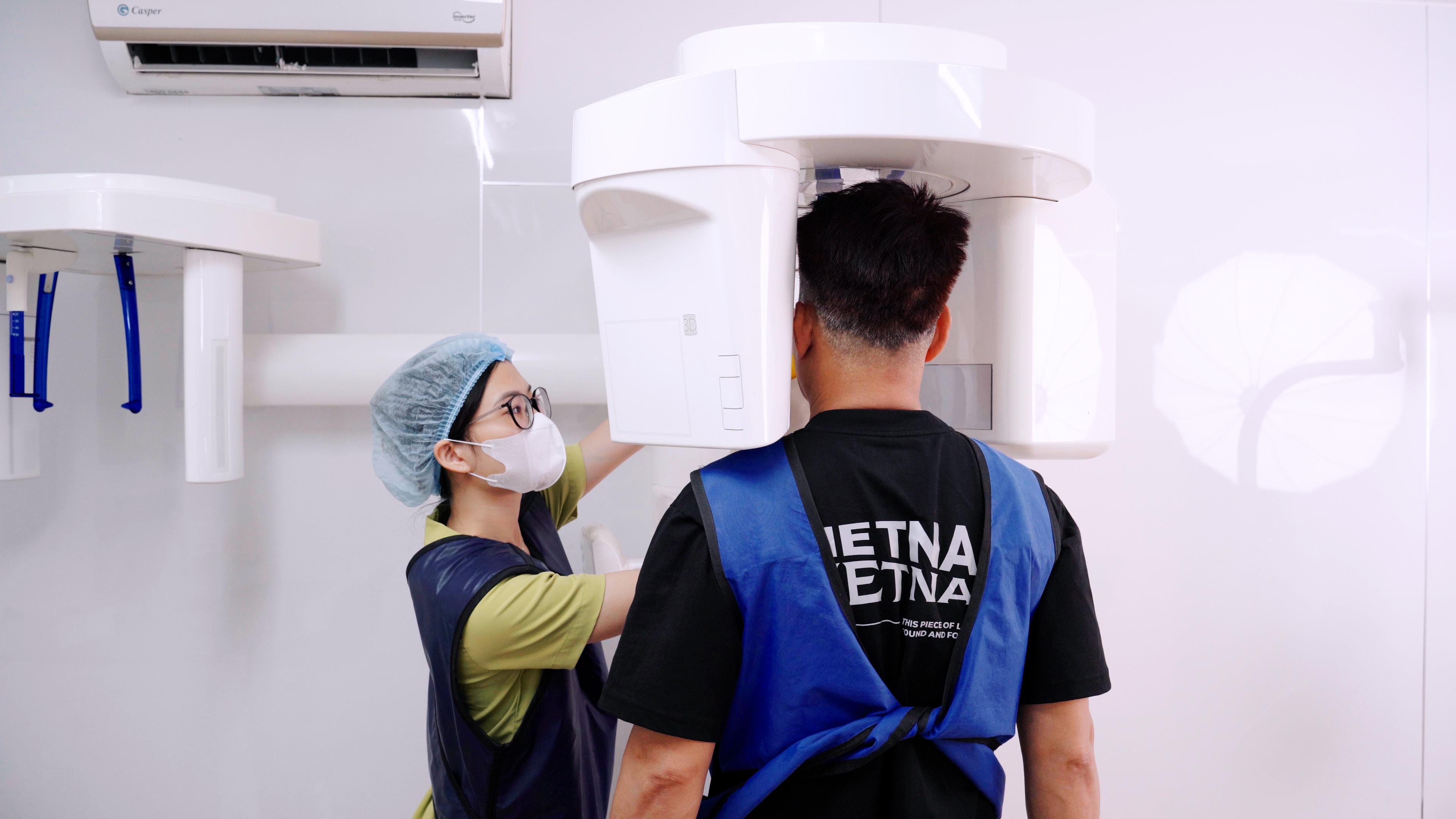
Hanoi clinics with good equipment will take their own X-rays on arrival, but your existing records speed up the consultation considerably and demonstrate bone density and gum health that informs implant planning.
Related Reading
- Top 6 Dental Clinics in Hanoi
- Is Dental Work in Vietnam Safe?
- Dental Insurance Country Coverage — Vietnam
- Dental Financing for Treatment Abroad
- Combine a Holiday with Dental Treatment
Sources
- Vietnam National Administration of Tourism, International Visitor Statistics 2025, hanoi.gov.vn
- Vietnam Dental Association, Pricing Reference Guide for International Patients, vda.org.vn
- Australian Dental Association, Dental Fees Survey 2024–25, ada.org.au